September 1 - 26, 2026
AN ANONYMOUS PASSAGE
— within Blank Spaces
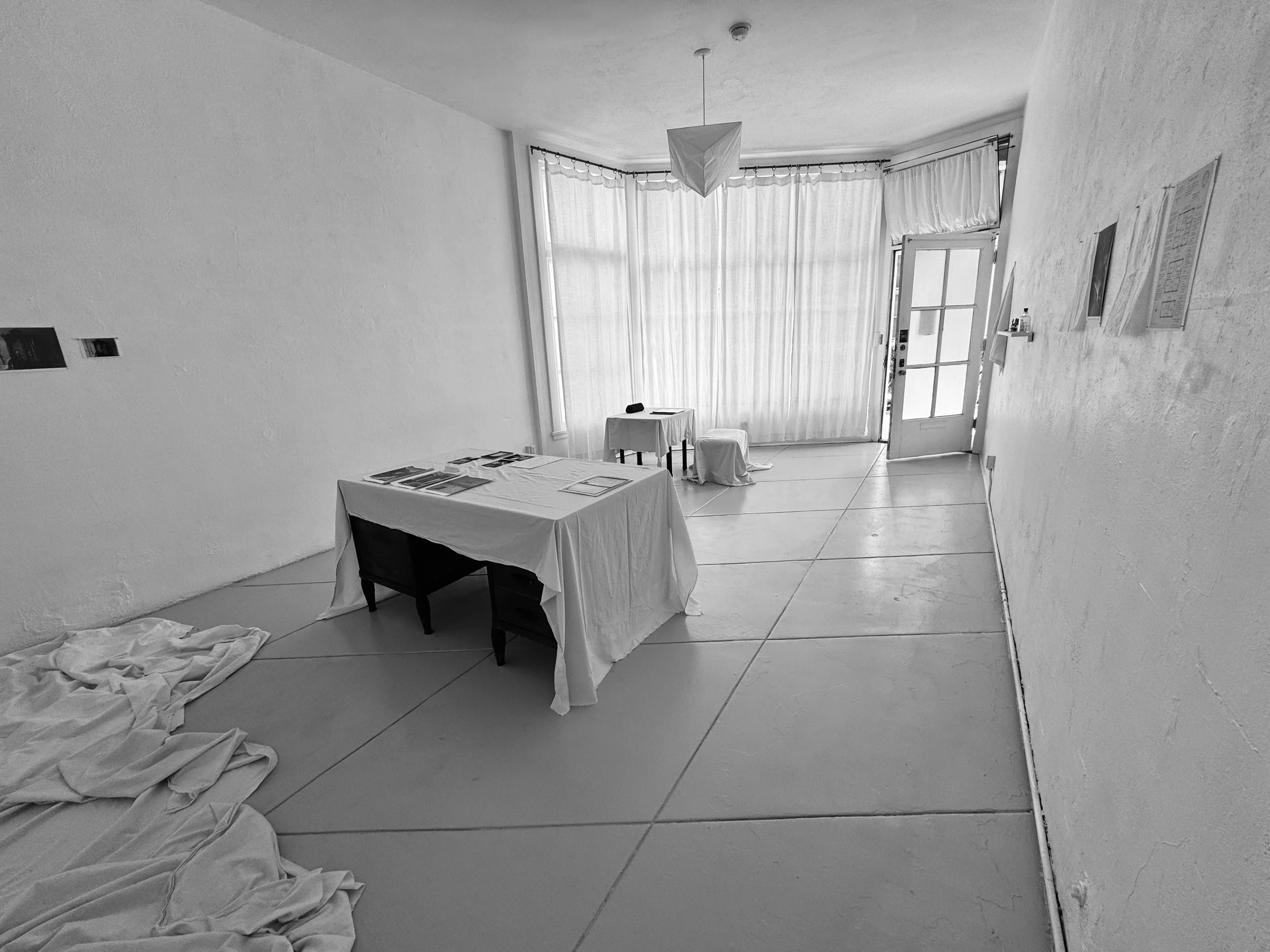
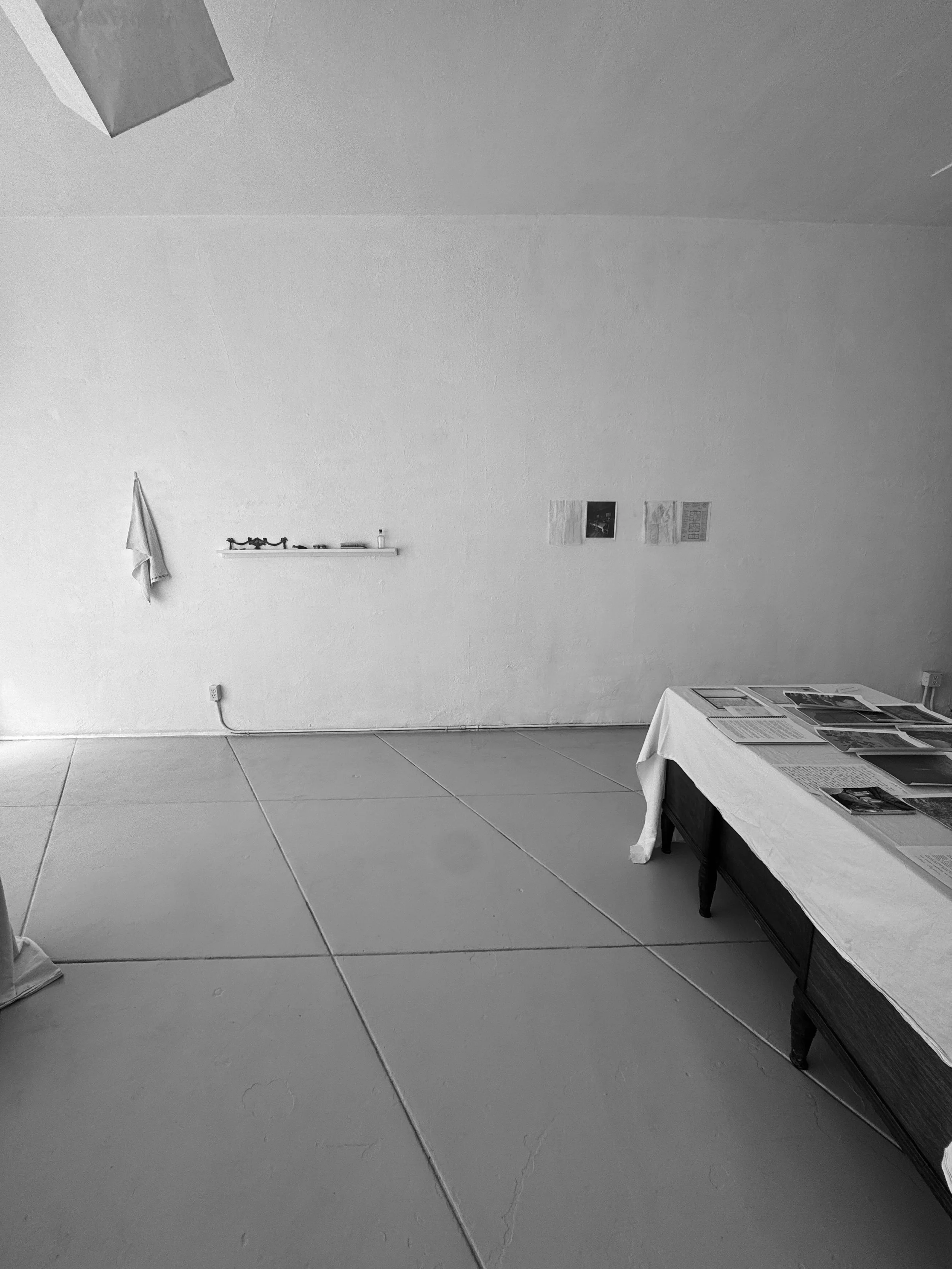
an intimate site responsive installation
by appointment | el Nido by VC Projects, 1028 1/2 N. Western avenue, Los Angeles 90029
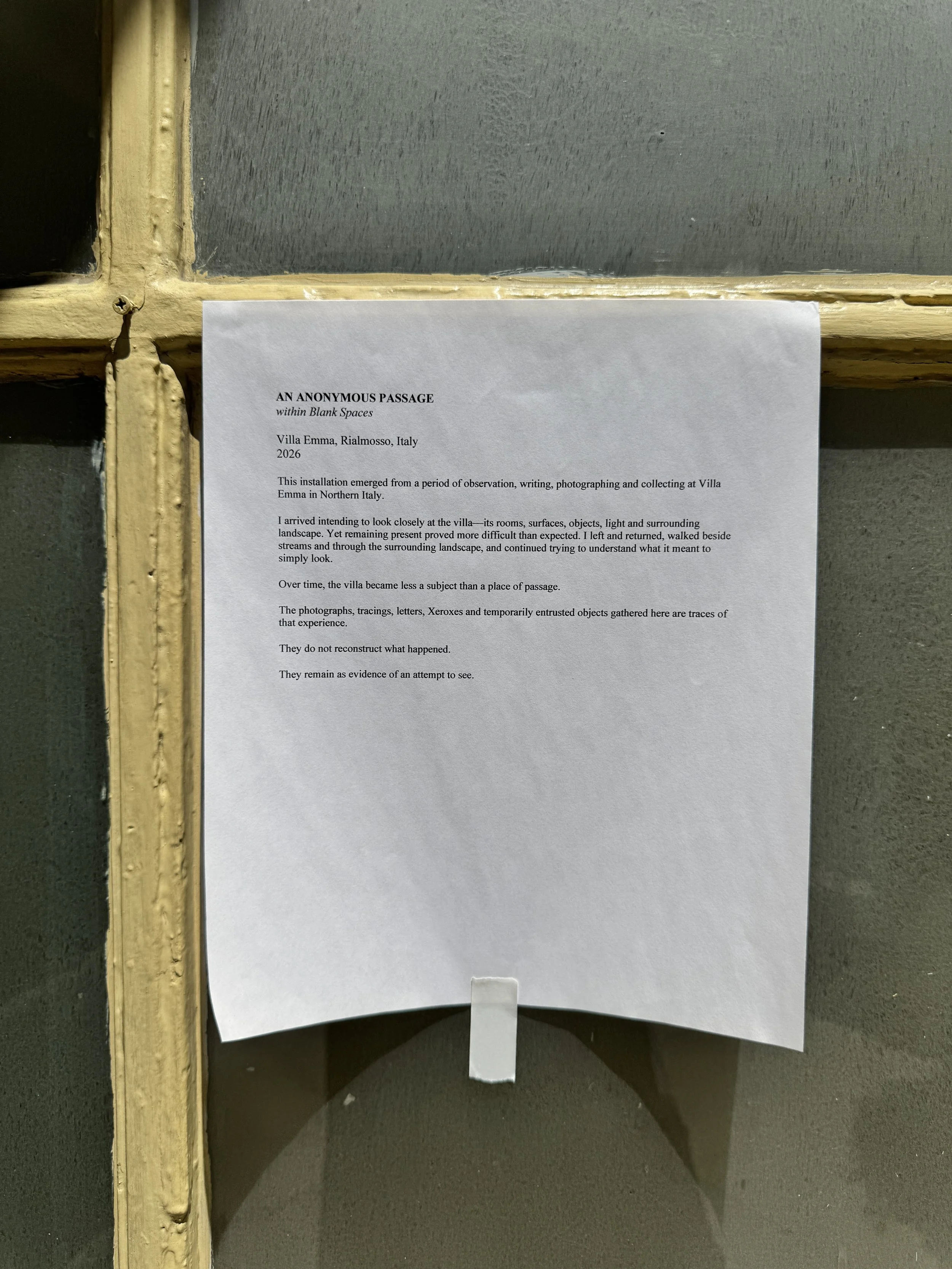
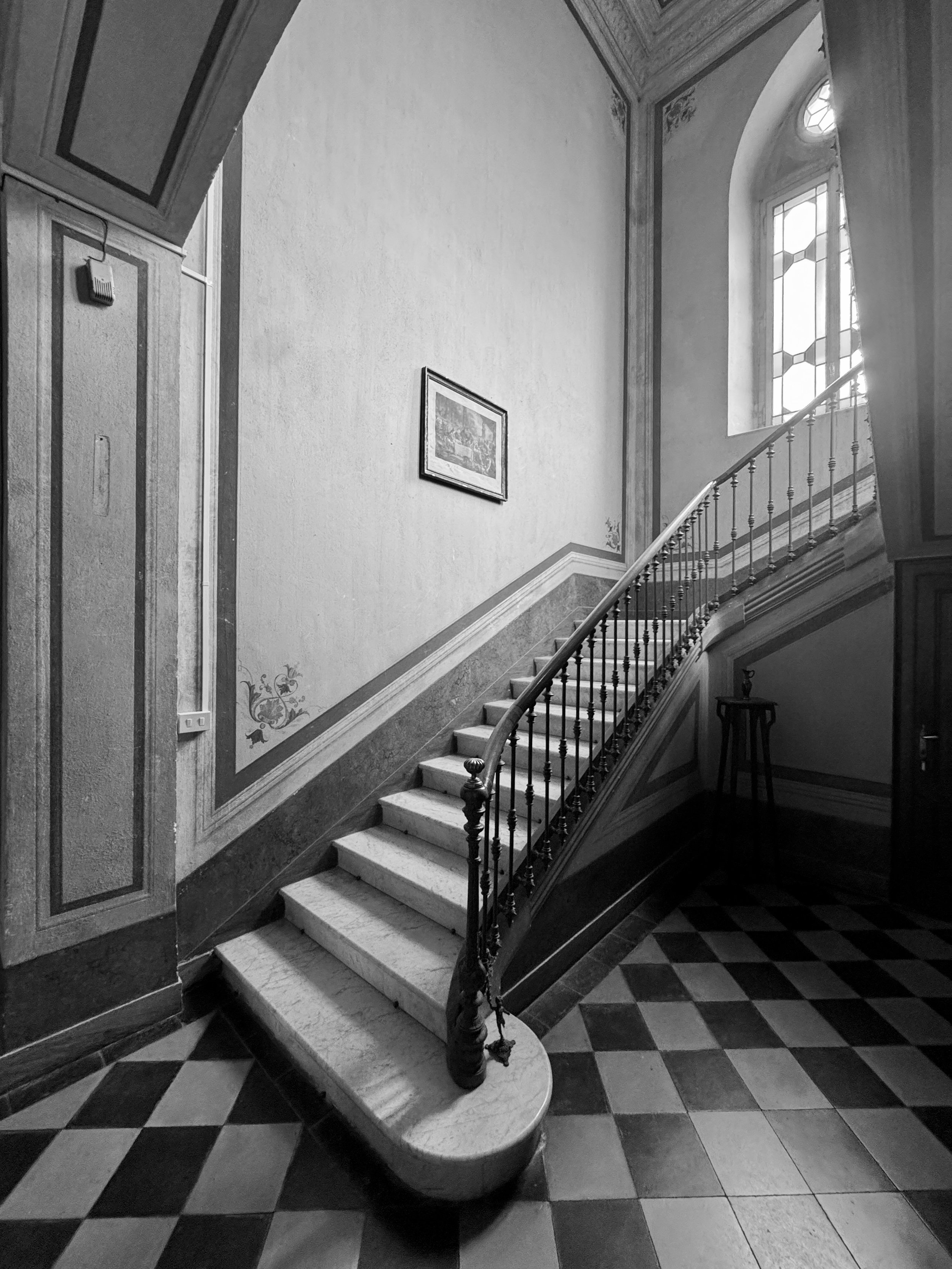
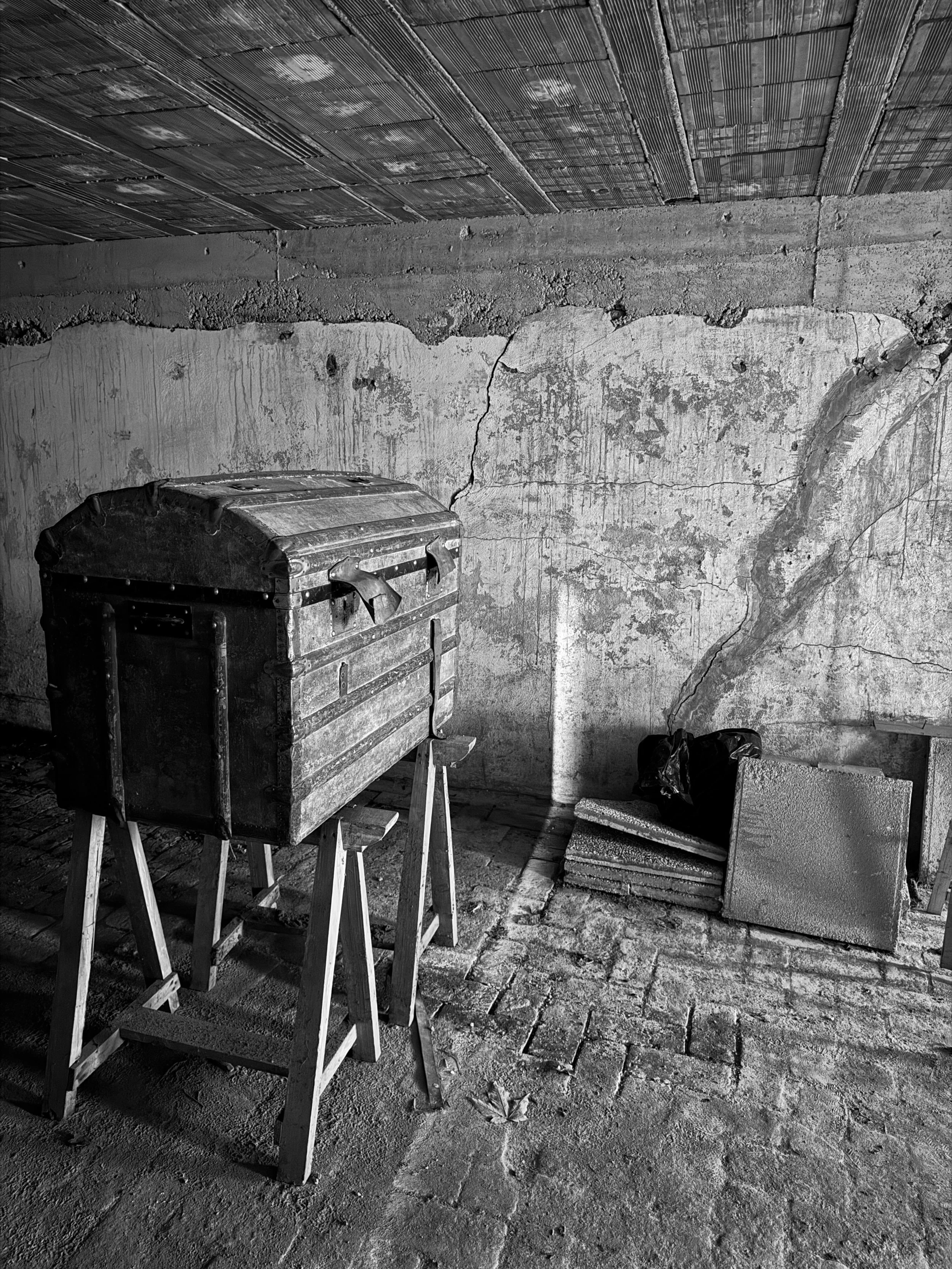
An Anonymous Passage — within Blank Spaces developed through repeated periods of observation at Villa Emma in Northern Italy.
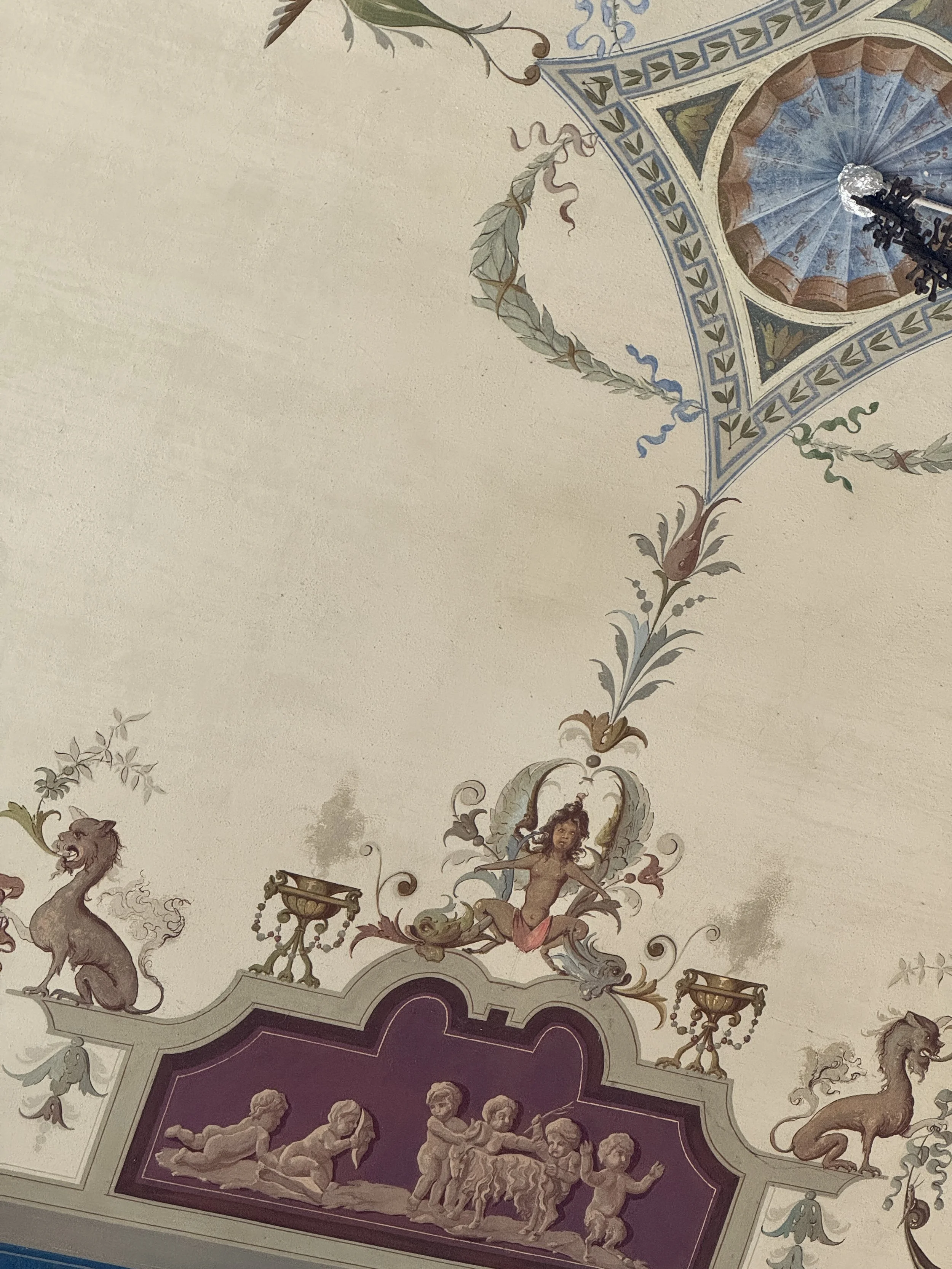
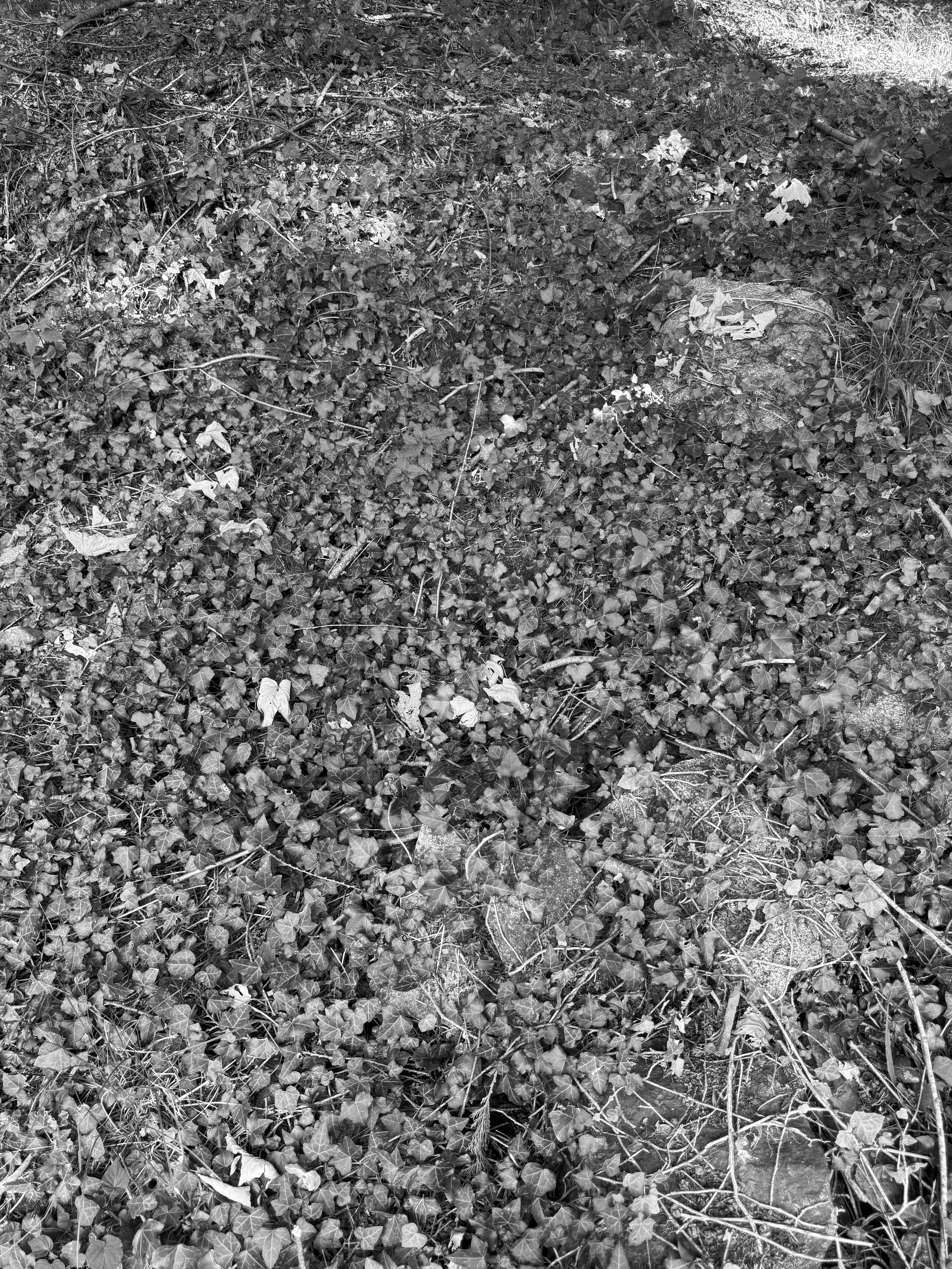
The project began with an attempt to look closely at the villa—its rooms, surfaces, objects, light and surrounding landscape. Photographs made during an earlier stay became the beginning of a continuing inquiry. Returning to the villa brought further writing, correspondence, tracings, Xeroxes, observations and a small collection of objects temporarily entrusted to the project.
Over time, the villa became less a subject to be documented than a place through which questions of looking, presence and displacement could emerge.
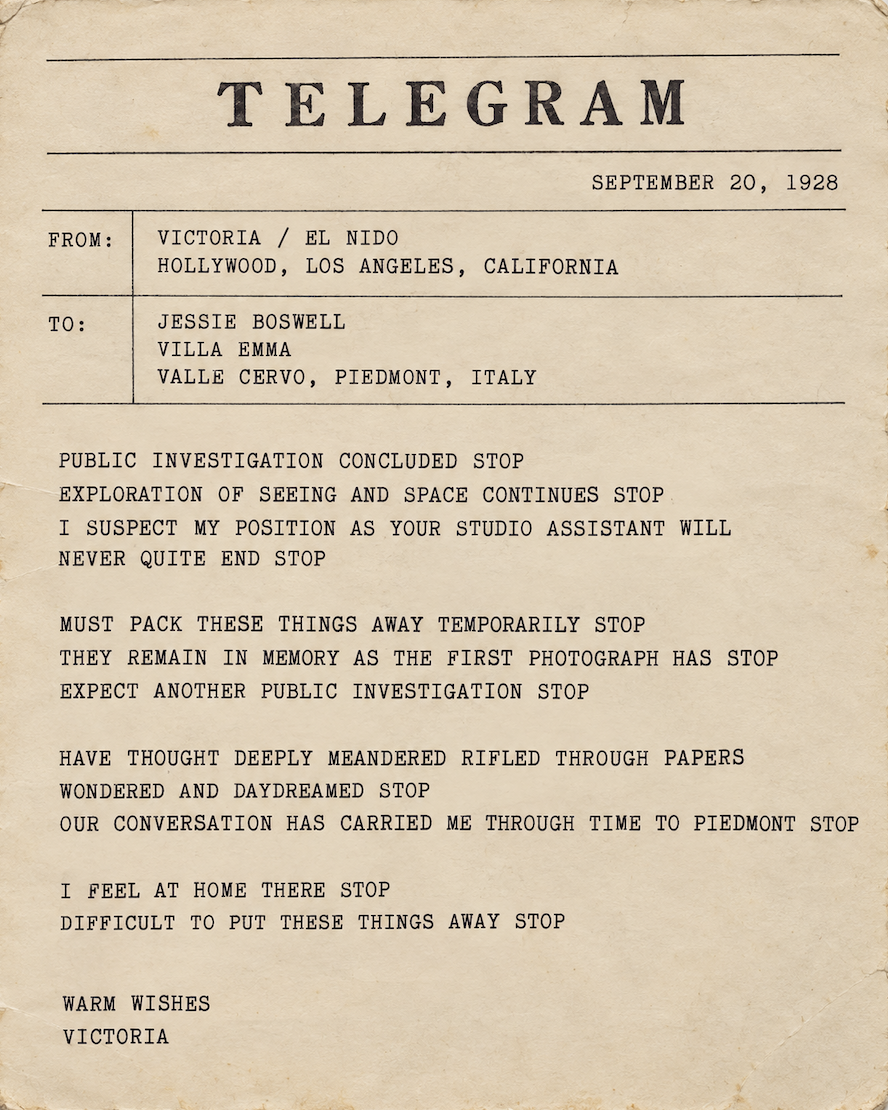
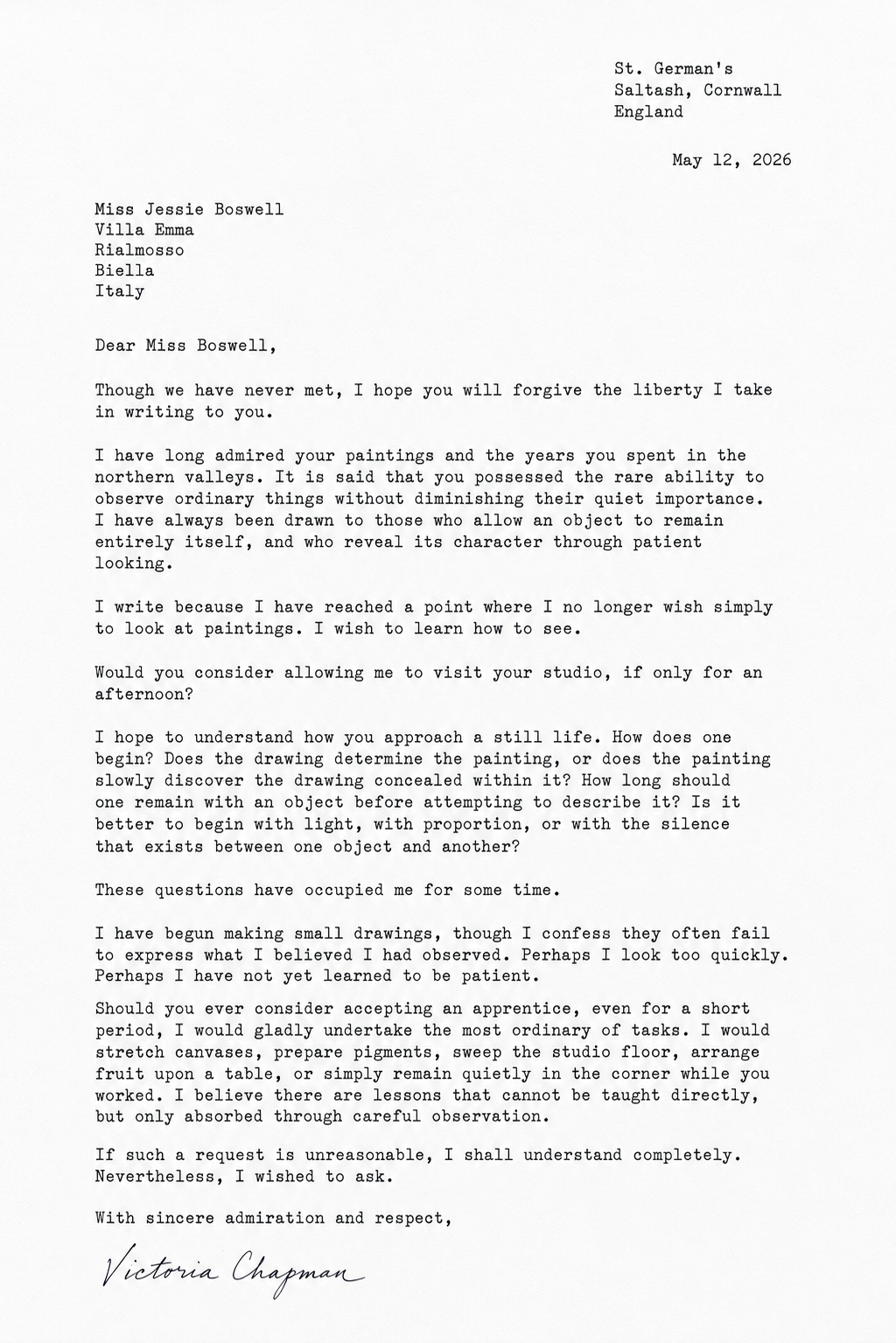
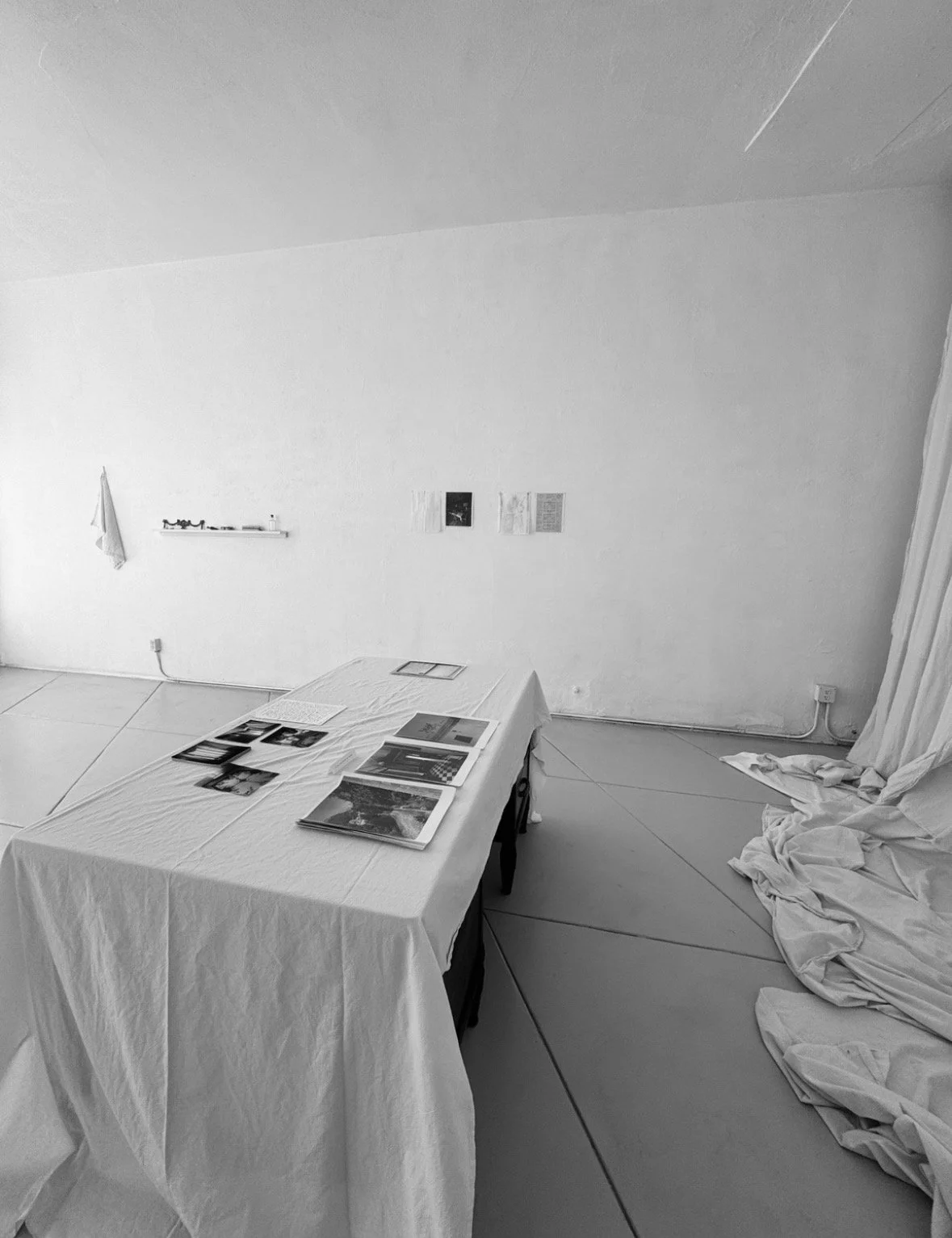
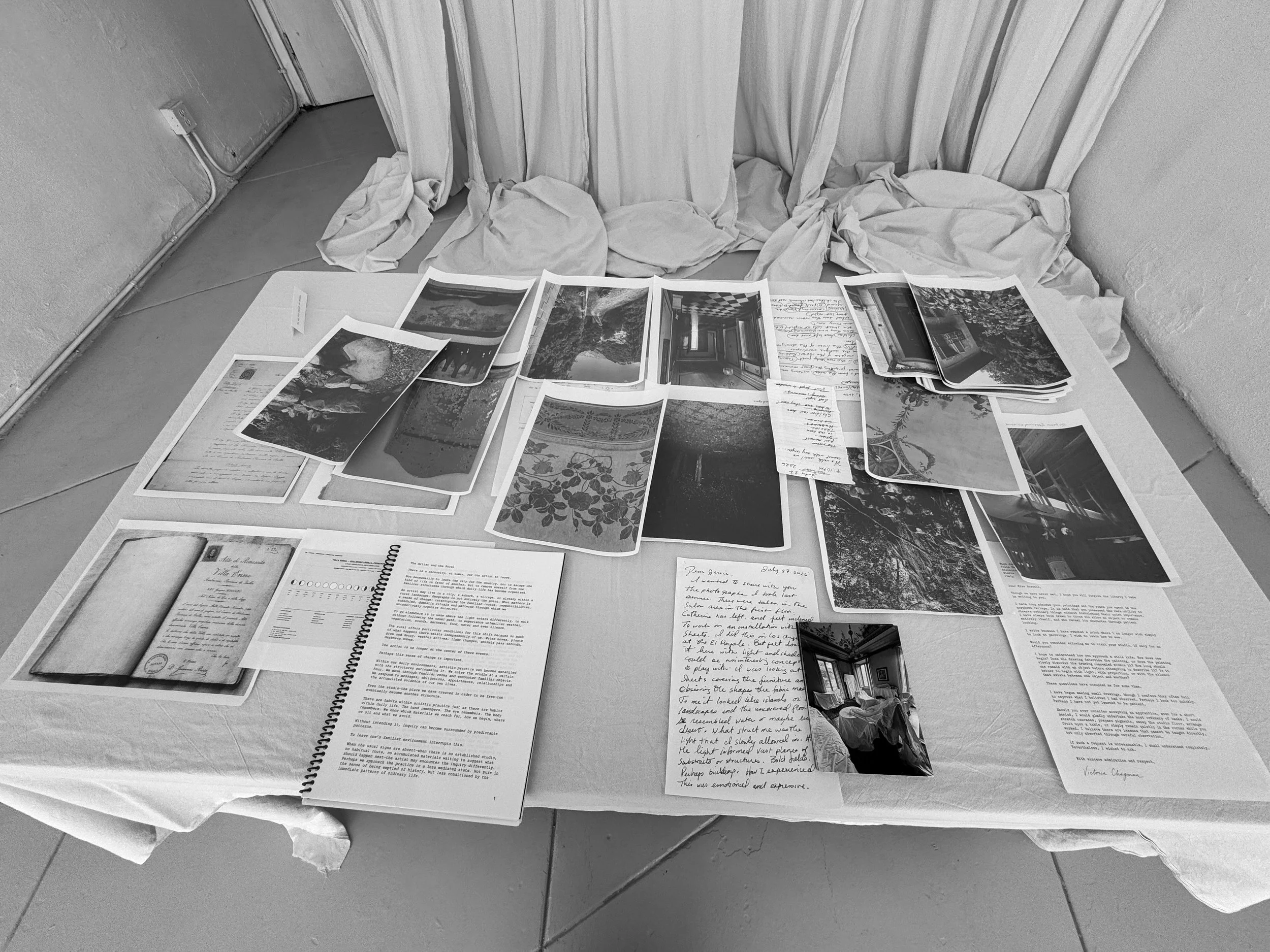
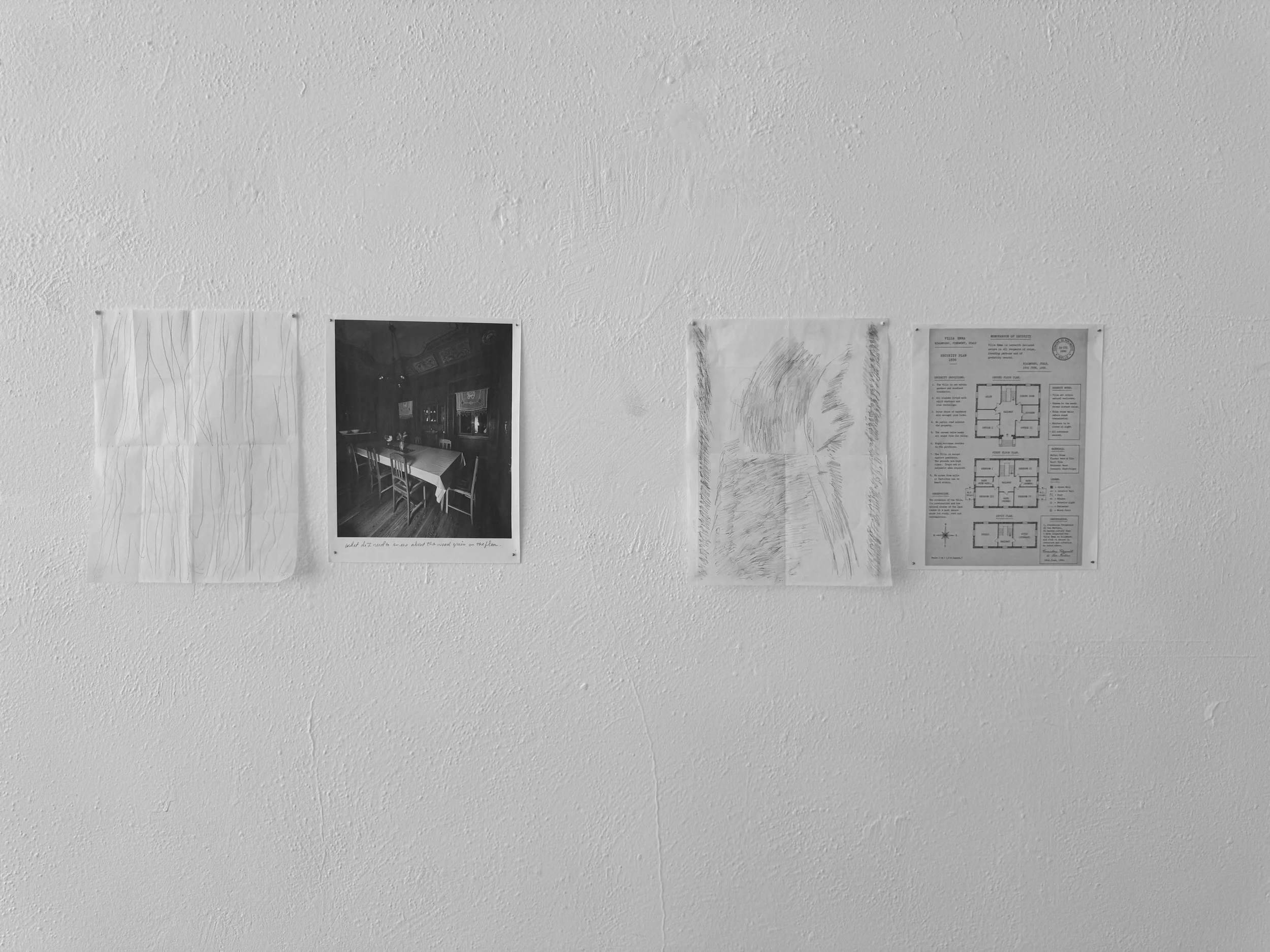
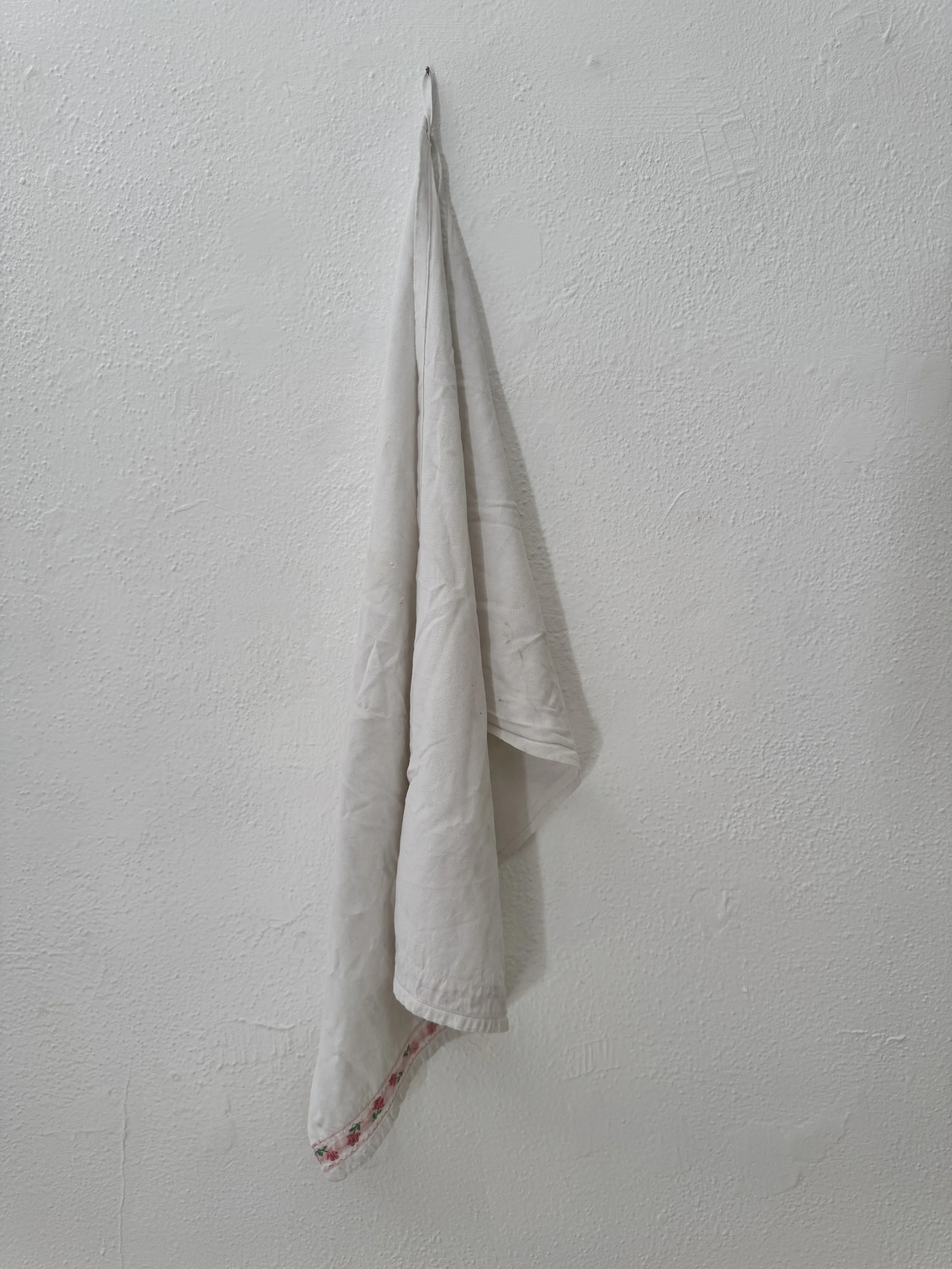
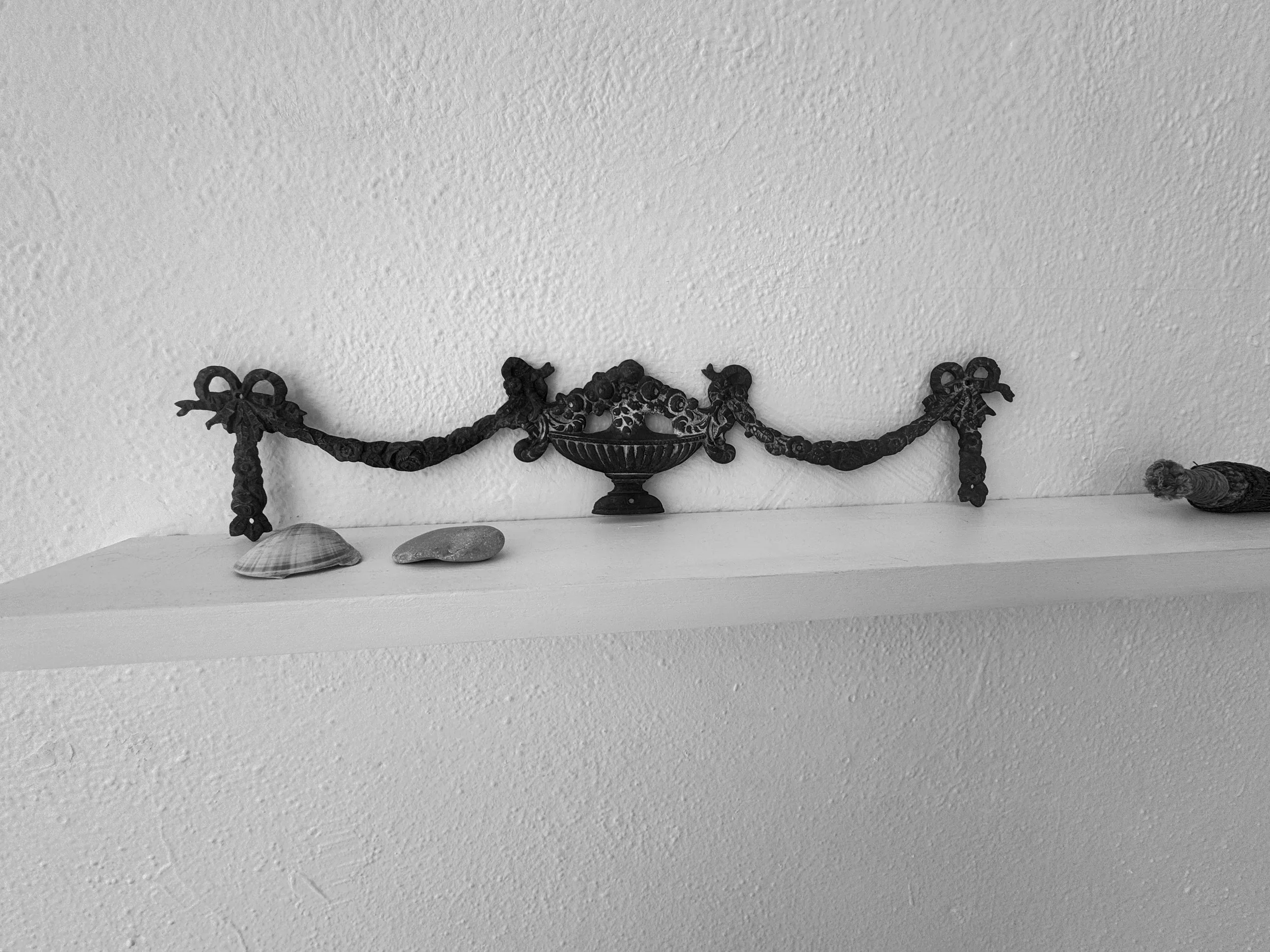
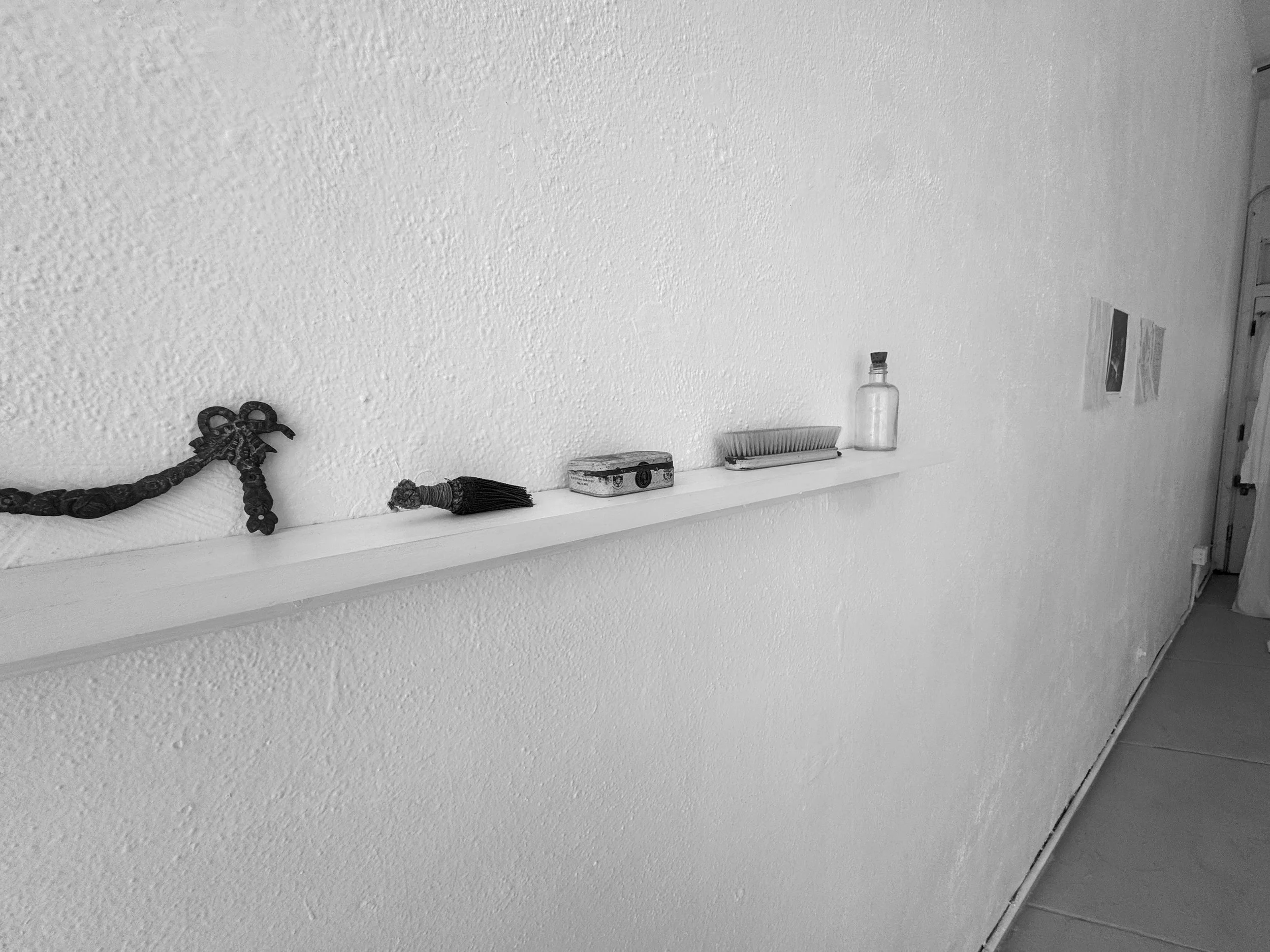
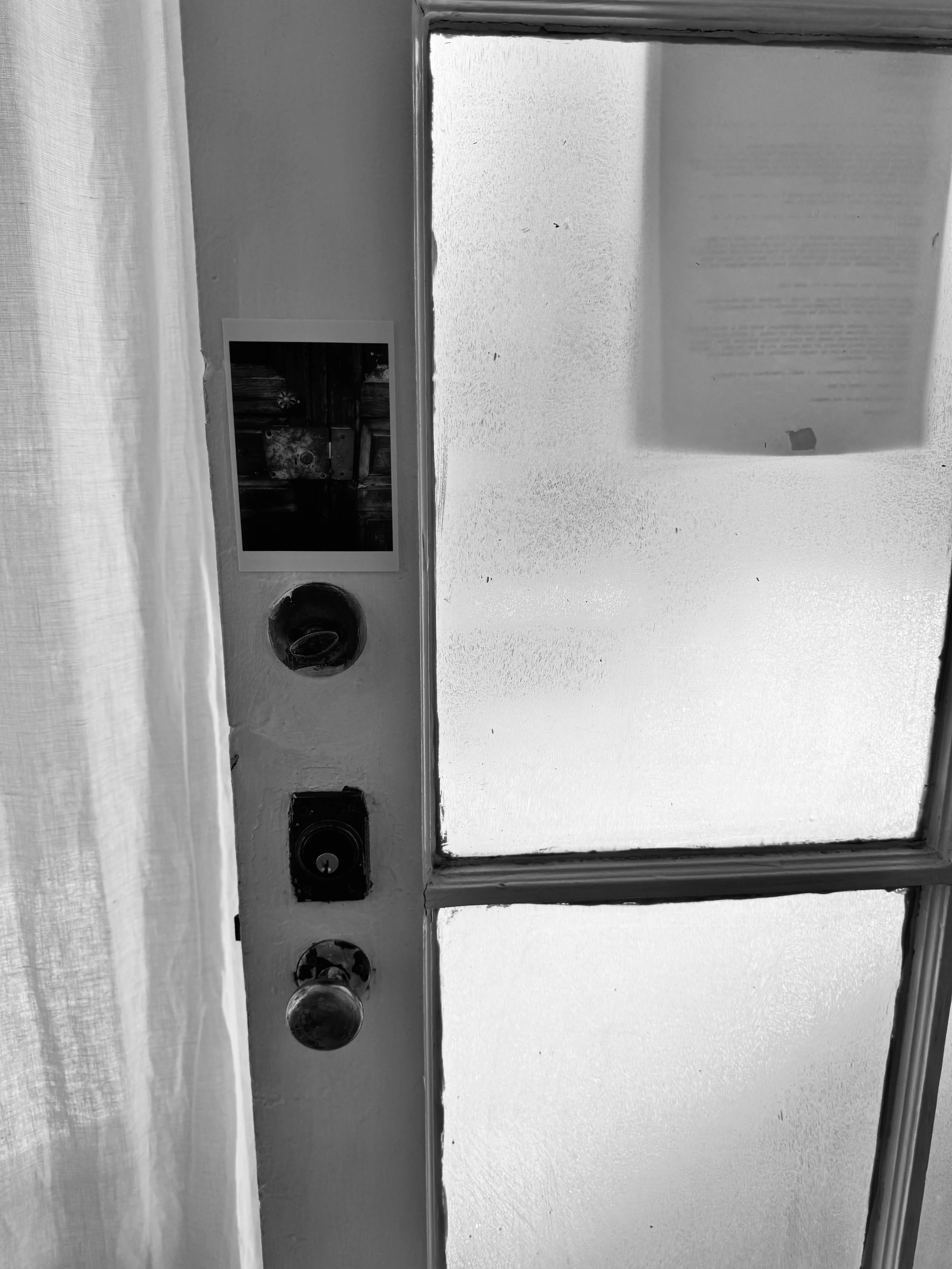
Presented together, these materials do not form a complete archive or attempt to reconstruct an experience. Some are carefully selected; others remain provisional, handled or unresolved. Letters sit beside photographs. Tracings record surfaces through physical contact. Xeroxes repeat and alter photographic images and may be handled by the viewer. Objects retain their connection to the place from which they came.
Together they form an incomplete field of evidence—an attempt to understand what was seen, what was missed, and what becomes visible through returning.
An Anonymous Passage remains an attempt to see.
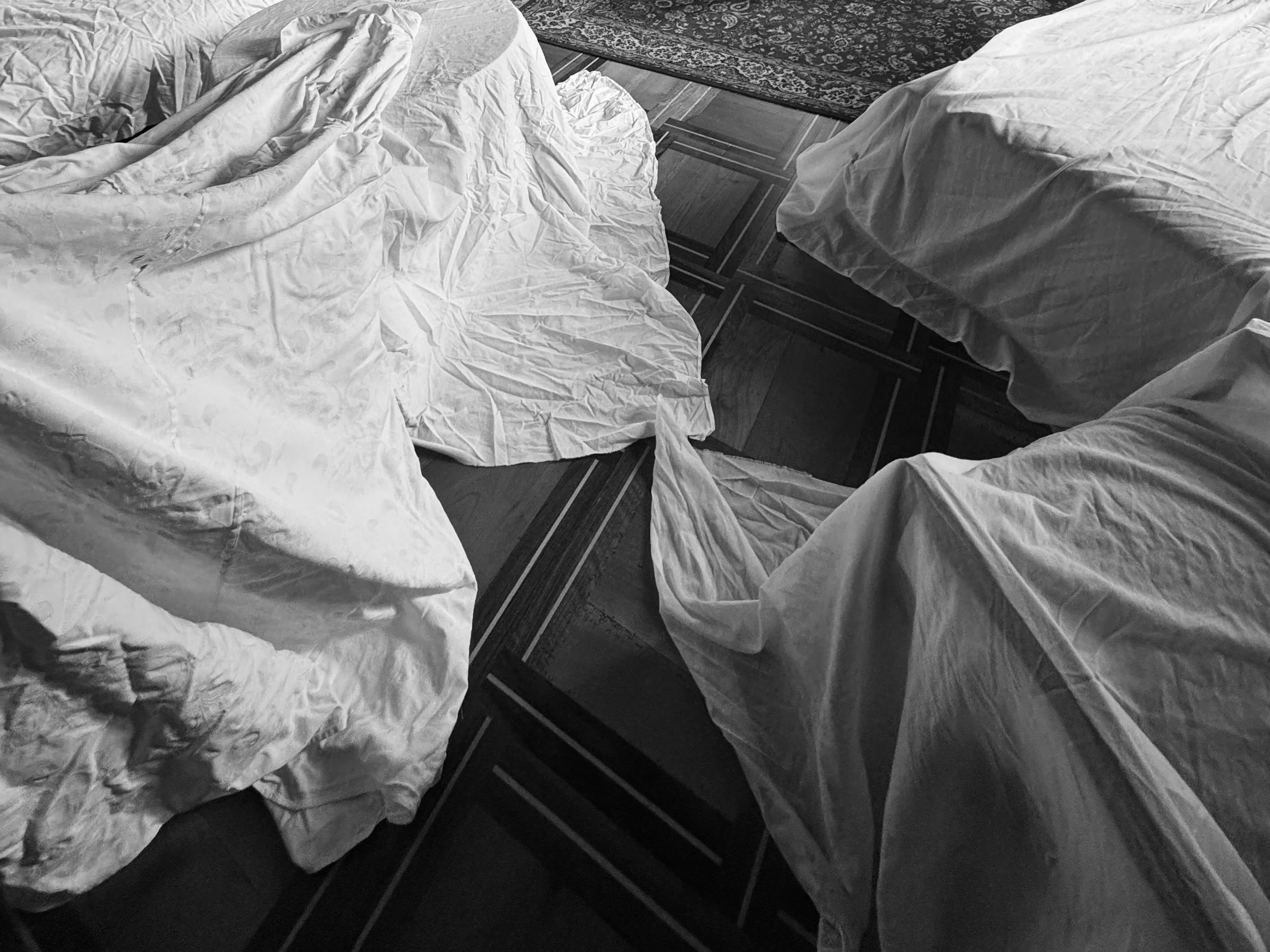
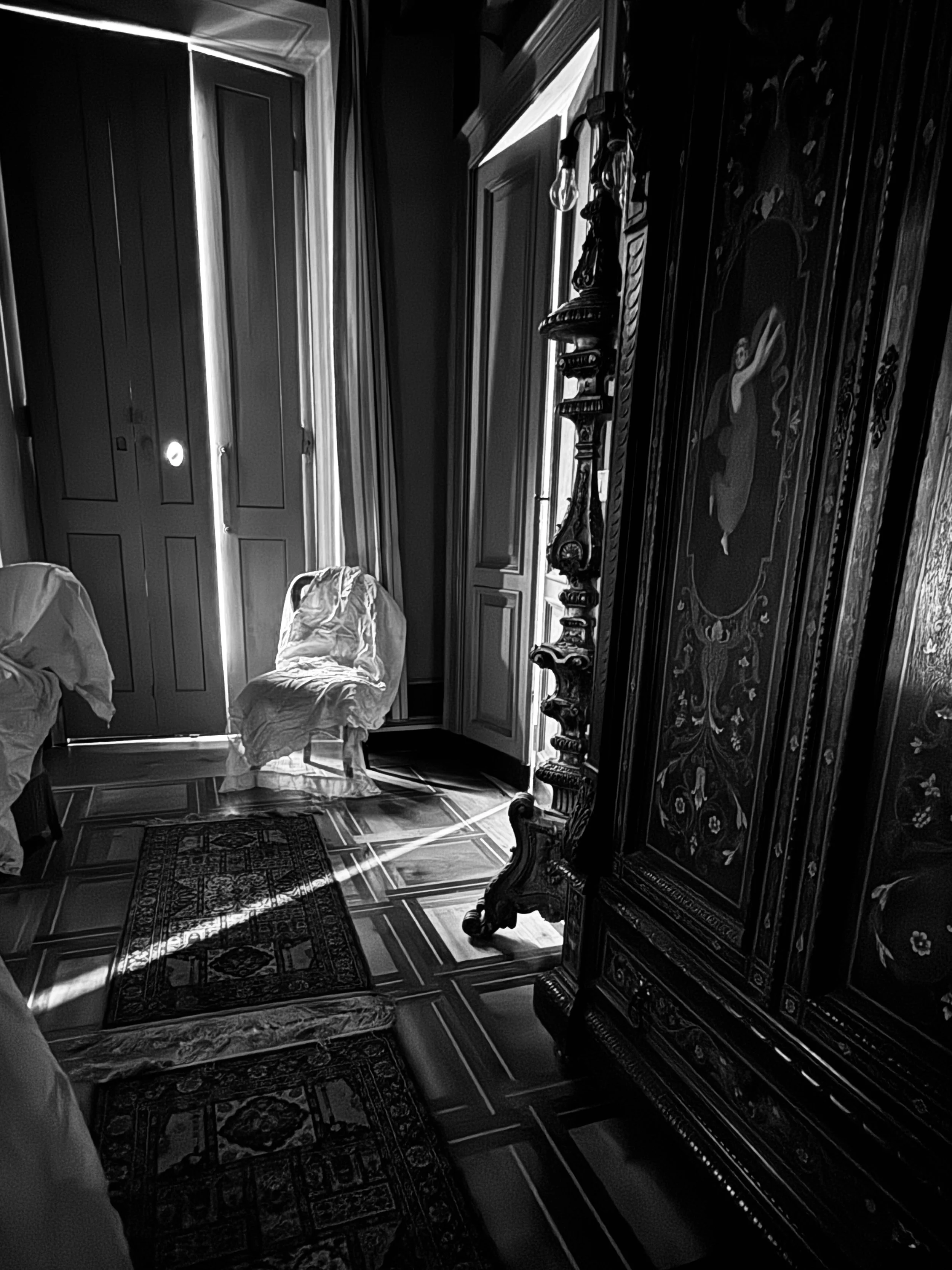
The photographs came first.
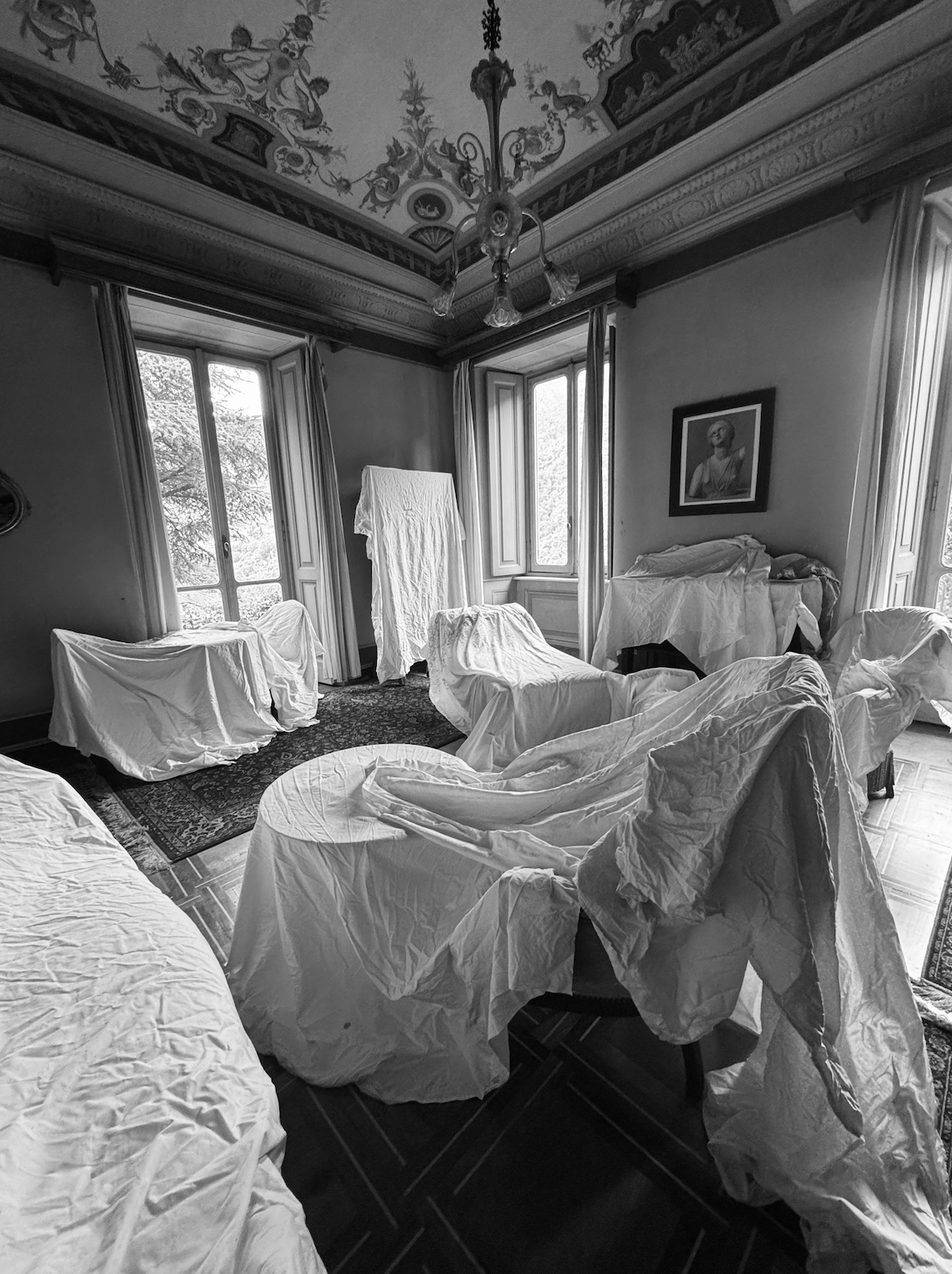
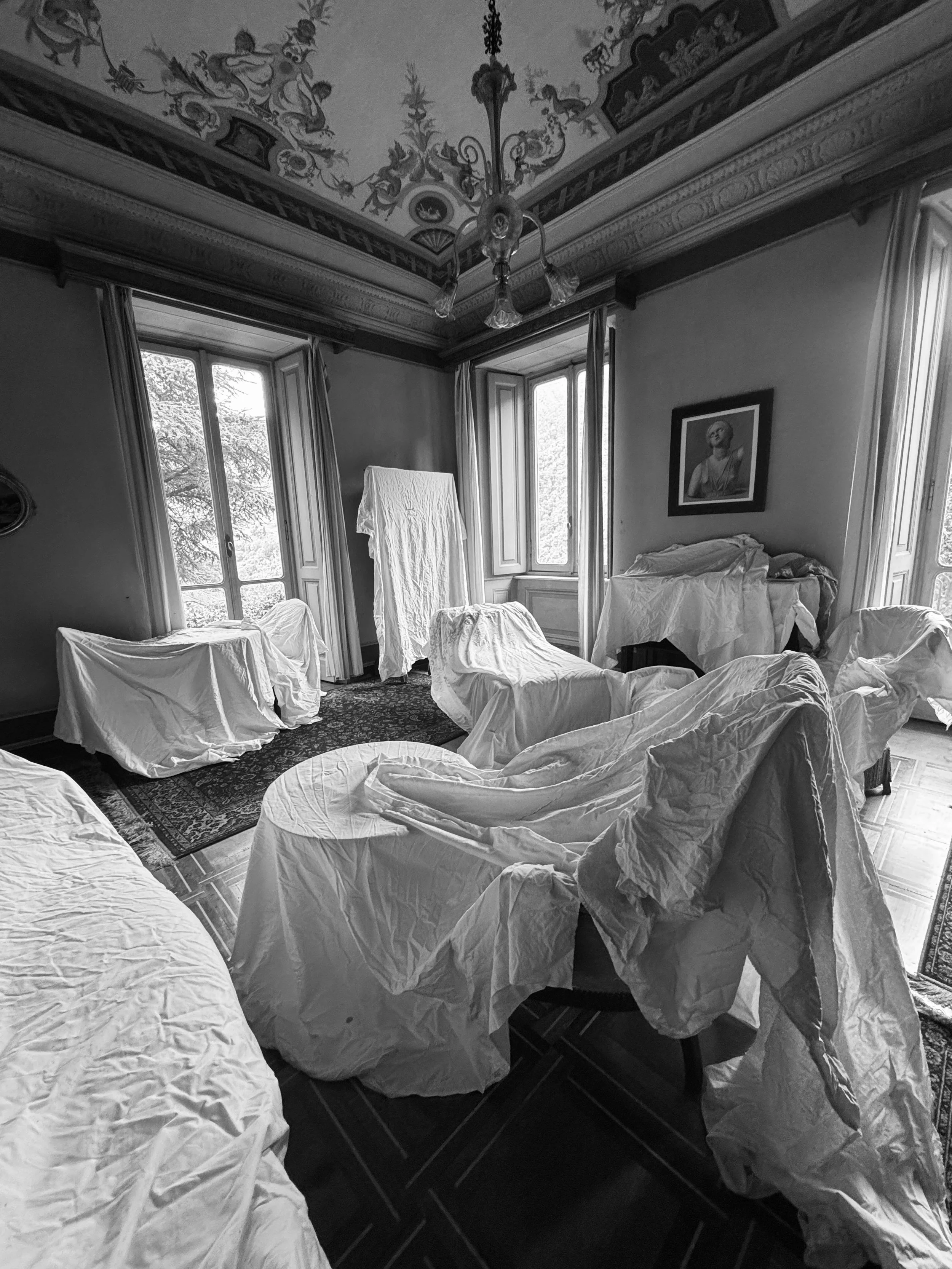
Made at Villa Emma at six o'clock in the morning on June 26, 2025, they began with the closing of the shutters, the covering of the furniture, and the gradual reintroduction of daylight.
The photographs were then put away.
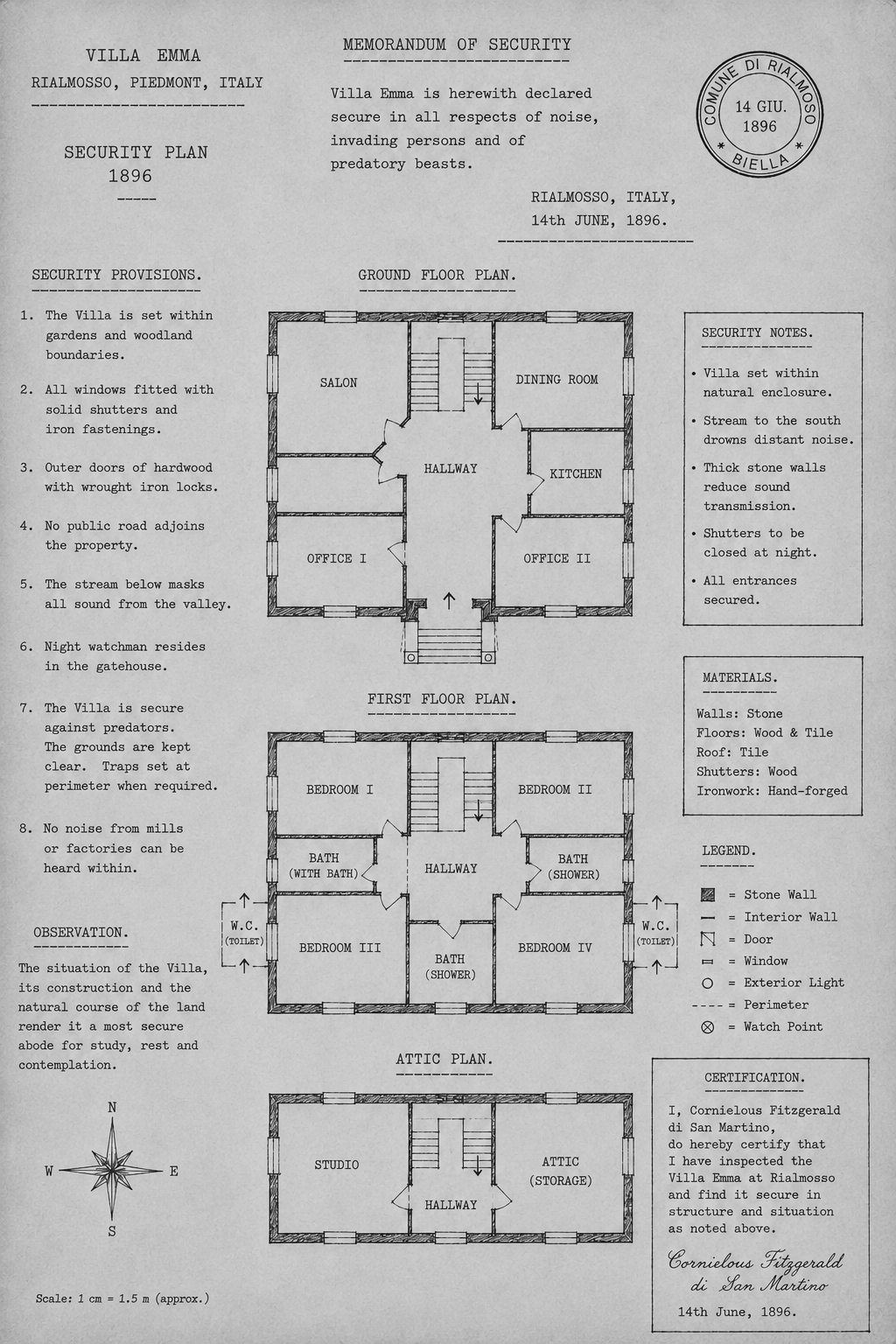
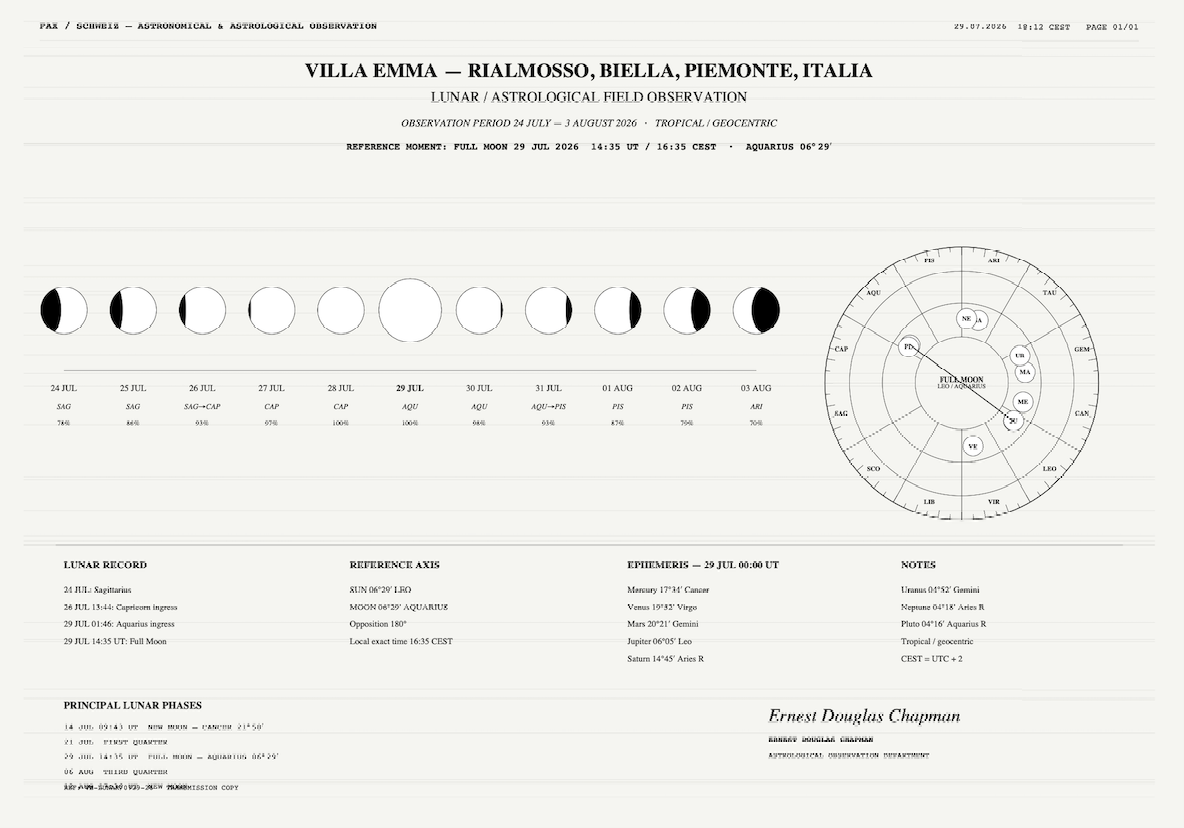
Nearly a year later, returning to them produced another body of material: letters, tracings, inventories, reports and an imagined archive.
The archive did not produce the photographs.
The photographs produced the archive.
The Artist and the Rural
is a reflection written following time spent at Villa Emma, considering, attention, vulnerability, and what may occur when artistic practice gives way to simply being.
EL NIDO PRESSS | LIMITED EDITION
NOTE BOOK No. 4
September 6, 2026, 6:22 pm | El NIDO by VC Projects
An Anonymous Passage - within blank spaces
THE PUBLICATION BECOMES AN OBJECT
The installation started with one photograph captured in 2025.
At six o’clock in the morning, I closed the shutters at Villa Emma and covered the furniture with white sheets. I was not trying to conceal the room. I wanted to quiet it—to create, for a moment, another landscape.
The floor became water. The covered forms became islands or continents. The house entered a state of suspension.
I did not yet understand what the photograph contained or where it would lead. I only knew that something had opened within it, and that I was still inside it.
The photograph remained with me.
When I returned to Villa Emma in the summer of 2026, I began to move through the house differently. I made tracings and rubbings. I wrote letters. I gathered observations and encountered objects that seemed to carry their own histories. Alongside these materials, I began constructing an imagined archive—a series of documents that belonged neither completely to the past nor entirely to the present.
The photograph had become a point of entry.
From there, the work moved through the architecture of Villa Emma and eventually into the site-responsive installation at El Nido. Photographs, letters, tracings, Xeroxes, documents, objects, and fragments were placed in relation to one another. Nothing followed a fixed chronology. Each element became a possible clue, opening one passage into another. The publication developed alongside this process.
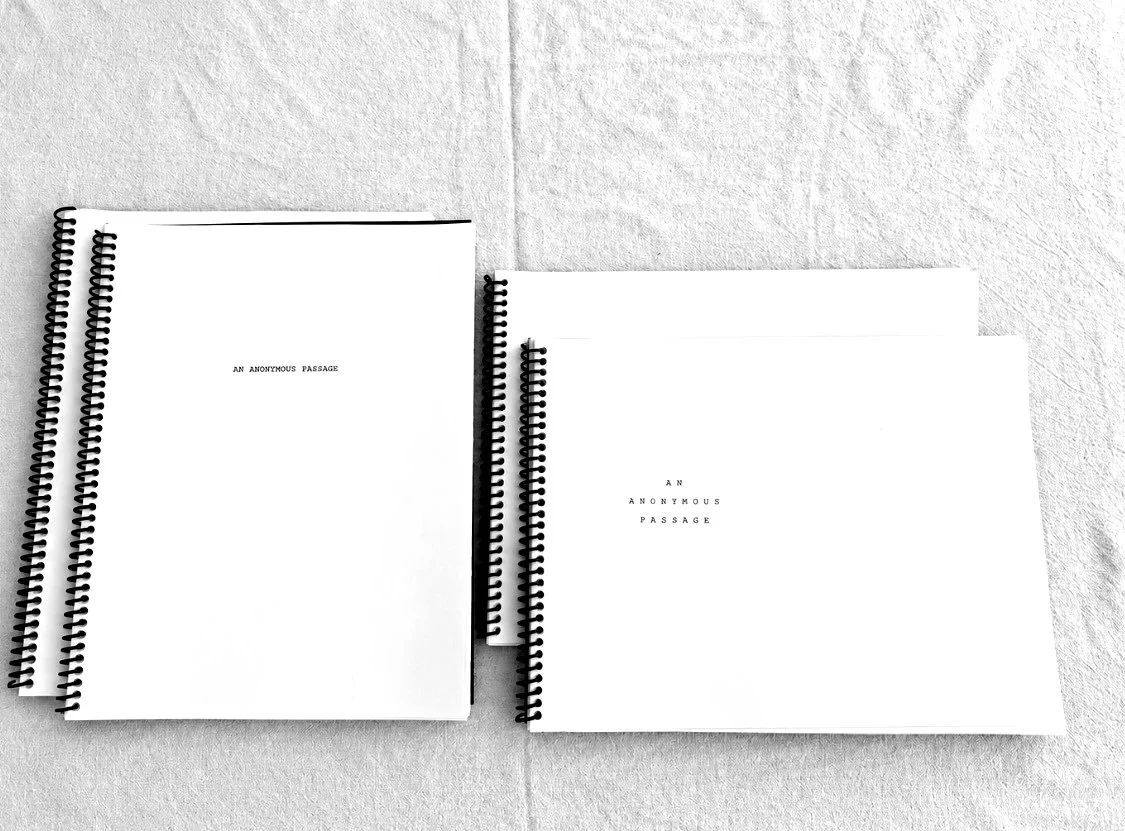
Over time, it became an object in its own right—one that accompanies and extends the installation. It follows the course of An Anonymous Passage through materials that had previously existed separately: a letter to Jessie Boswell, selections from the imagined archive, reproductions from the original photographic series, images of scenes shaped by Villa Emma, and photographs of the installation at El Nido.
The publication also includes the essay The Artist and the Rural, written after my return from Italy. The essay considers what can happen when an artist leaves the structures that continually confirm who they are and how they work. It moves through place, architecture, vulnerability, attention, and the body’s experience of entering and inhabiting unfamiliar space.
Placed inside the publication, the essay does not explain the installation. It offers another way of moving through the conditions from which the work emerged.
The publication is not a catalogue or a record of a completed exhibition. It is another passage through the work.
On its pages, the photograph becomes a letter. The letter enters an archive. The archive encounters the installation. The installation then returns to the photograph from which it began.
There are two versions of the publication: one vertical and one horizontal. Both are 8.5 × 11 inches, 25 + pages, spiral bound, and composed primarily of black-and-white photographs and text printed on ordinary paper. Each copy is assembled individually and is inherently a little different from the other.
The vertical and horizontal publications are each produced in an edition of three, signed and numbered.
Vertical publication
Edition of three — $40 EA.
Horizontal publication
Edition of three — $40 EA.
IF YOU LIVE OUTSIDE OF LOS ANGELES, I AM HAPPY TO RESEARCH SHIPPING QUOTES
Available directly through El Nido / VC Projects.
Victoria@vcprojects.art