THIS EXHIBITION WAS REVIEWED BY art and Cake


PHOTOGRAPHY INTO SCULPTURE — AN HOMAGE AND AN UPDATE
a traveling group exhibition
exhibition dates: April 4 - JUNE 6, 2026
Opening in los angeles on APRIL 4, 2026 FROM 3 - 5 PM
CLOSING IN LOS ANGELES, SATURDAY, JUNE 6, 2026 FROM 11 AM - 1 PM
featuring: Bennie Flores Ansell, Roberta Toscano, Fabiola Ubani, oona hyland
Dawn Surratt, Silvia Gaffurini, L. Mikelle Standbridge, and Olga Caldas
Curated by L. Mikelle Standbridge
STAGED BY VICTORIA CHAPMAN for El nido
El Nido by VC Projects
1028 1/2 N. Western avenue, Los Angeles, California 90029
by APPOINTMENT ONLY
Photography into Sculpture — An Homage and an Update revisits the discourse initiated by Peter C. Bunnell’s landmark 1970 exhibition at the Museum of Modern Art, which challenged photography’s perceived flatness and expanded the medium into objecthood, installation, and material experimentation.
Originally presented at Casa Regis in northern Italy, the exhibition arrives in Los Angeles in a distilled form. At El Nido, a Los Angeles–based creative studio and exhibition space, the works are given space to be encountered individually—almost as case studies—inviting viewers to reflect on photography’s evolution as both image and object. Each work engages material, time, and perception—inviting reflection on photography as both trace and transformation.
special note: a portion of the casa regis exhibtion will be traveling to immix gallery, PARIS, FRANCE during september 2026
A Note from Victoria
Join us for this unique exhibition—an ongoing conversation exploring how photography has evolved into object and sculptural form. Initiated at Casa Regis: Center for Culture and Contemporary Art in Italy, the exhibition carries forward a dialogue rooted in materiality, transformation, and perception.
I traveled to Italy last month to work closely with curator L. Mikelle Standbridge, selecting works to bring back to Los Angeles. In reimagining the exhibition for El Nido, I was guided by a vision to create a more ceremonial experience—held within my usual aesthetic of minimal atmosphere. I see El Nido as a kind of laboratory space, with a subtle Victorian sensibility—an environment for inquiry, contemplation, and quiet transformation.
Eight artists come together here, their works forming a shared field of inquiry—attuned to place, existence, and the body. Roberta Toscano, Silvia Gaffurini, and L. Mikelle Standbridge hail from Italy; Oona Hyland from Ireland; Dawn Surratt and Bennie Flores Ansell from the United States; Olga Caldas from Paris; and Fabiola Ubani from the Canary Islands.
El Nido is a space engaged in global conversation, and this exhibition continues that exchange—inviting reflection across borders, disciplines, and ways of seeing.
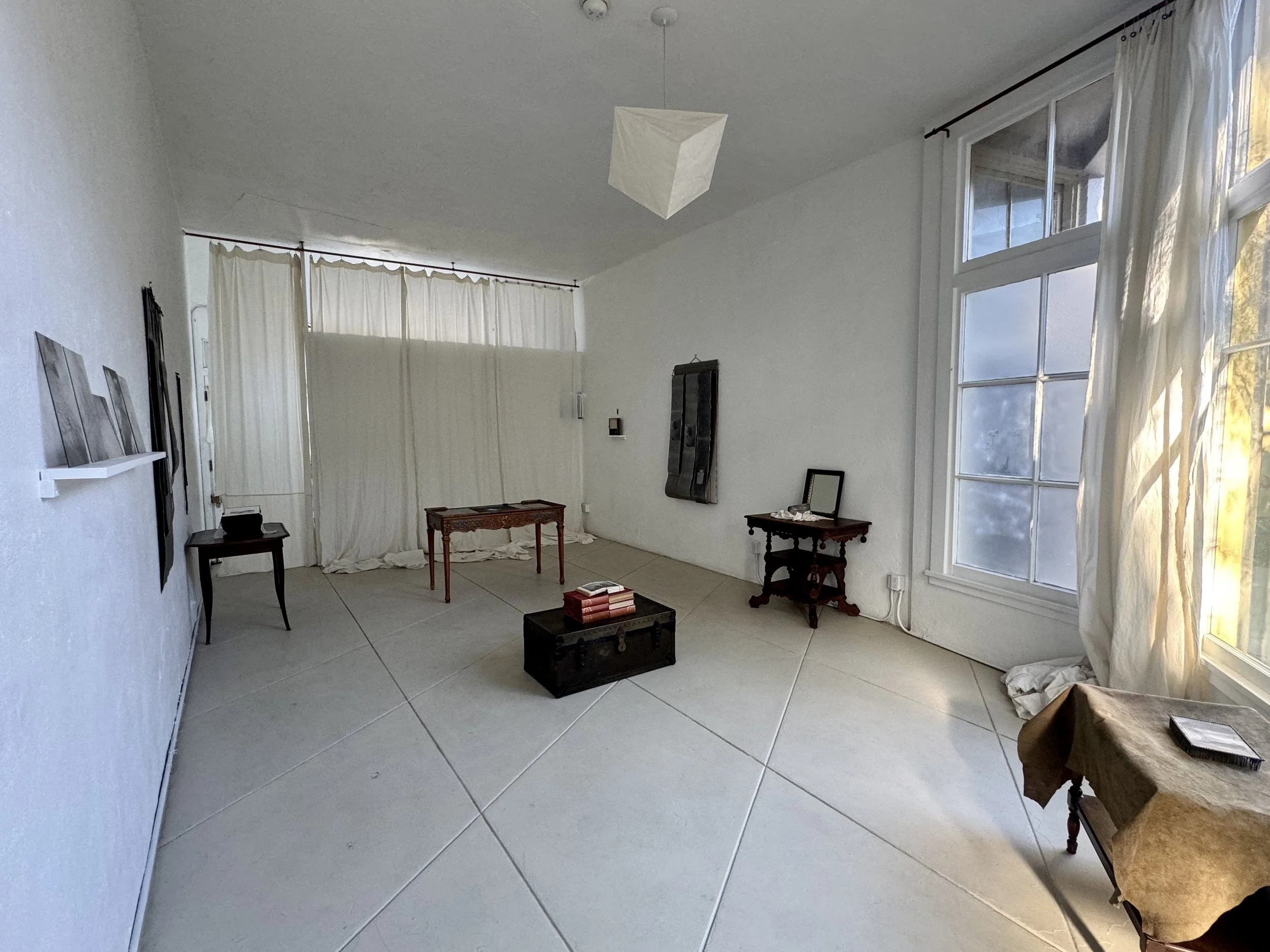
installation view at el nido
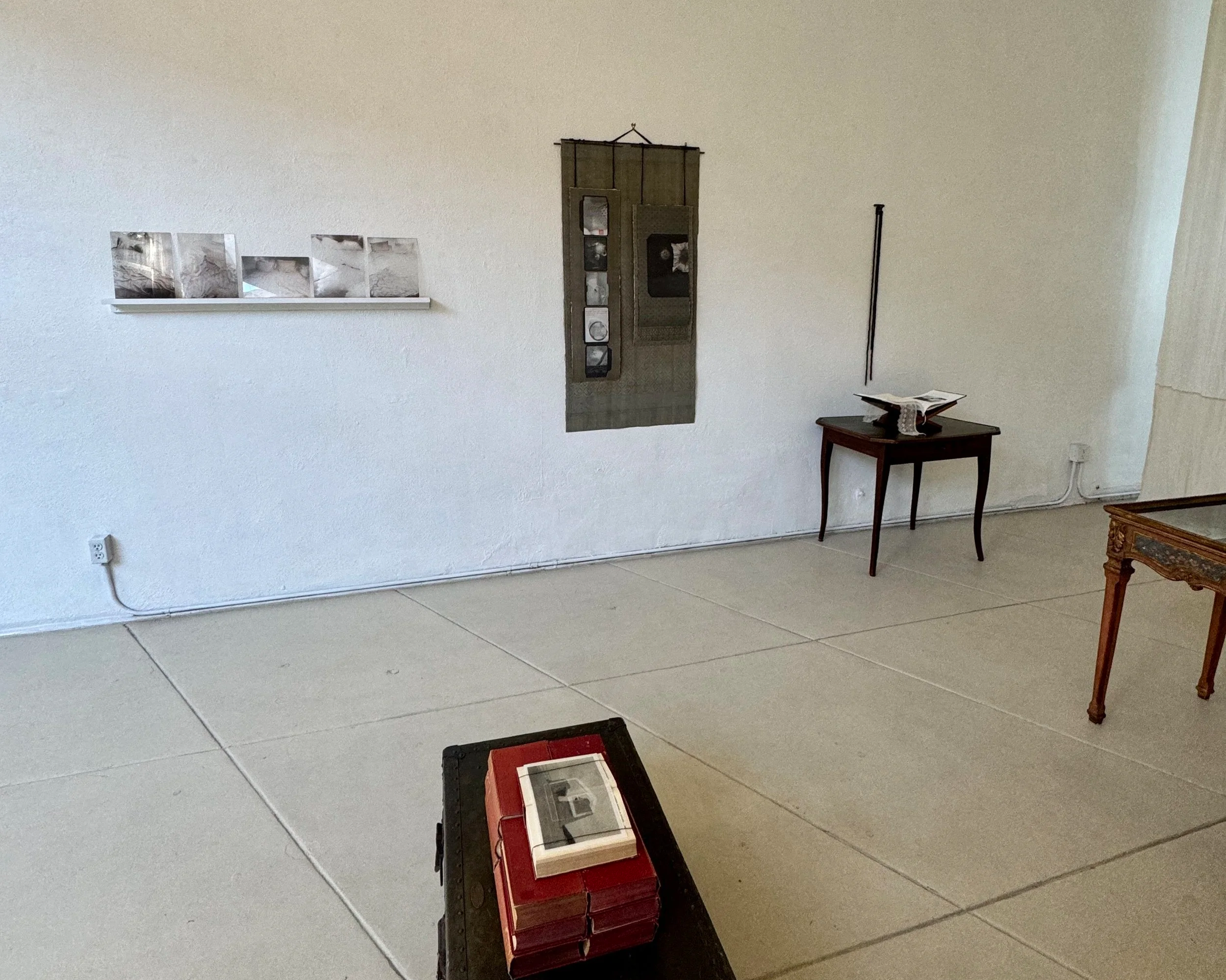
installation view at el nido
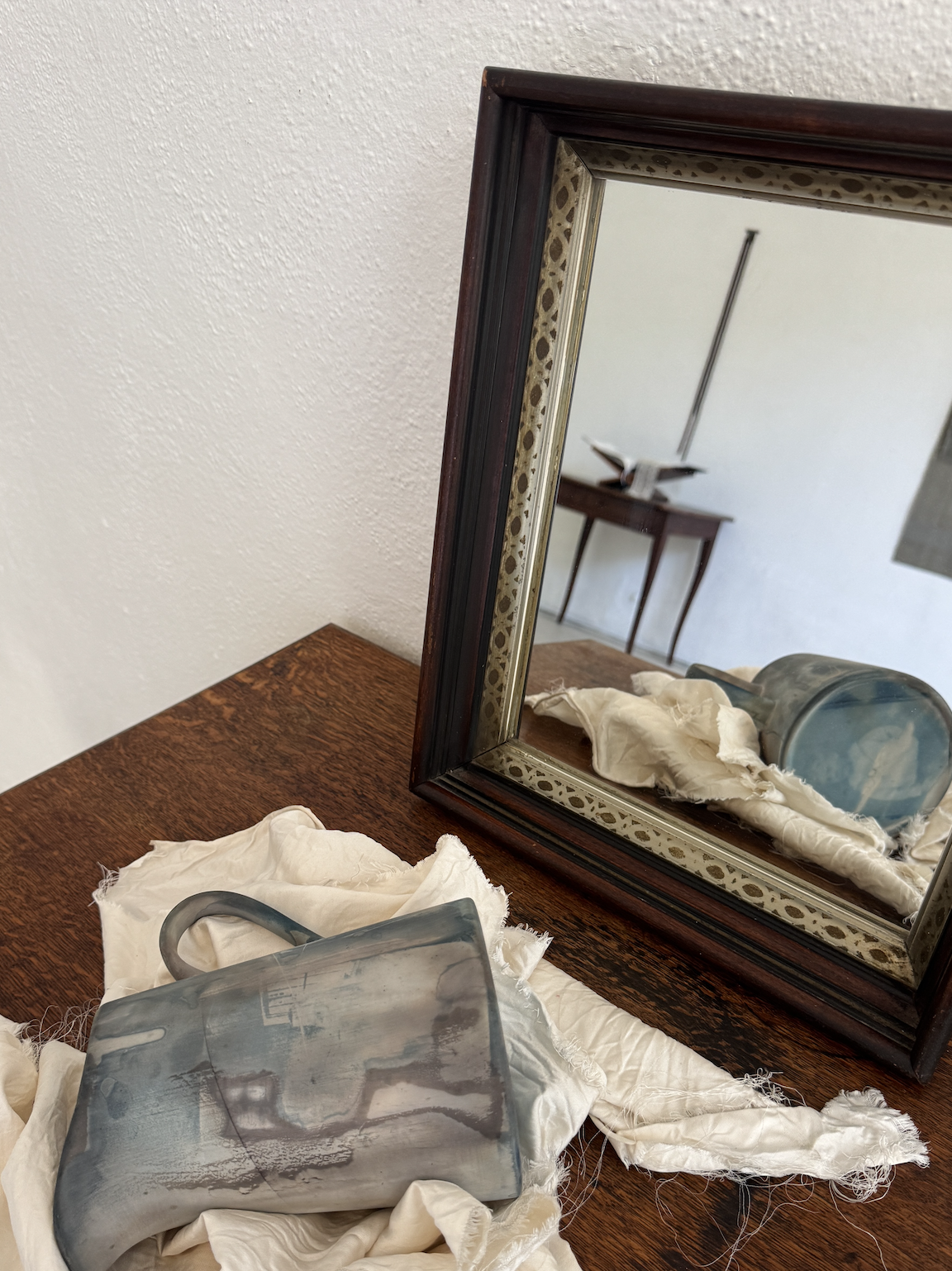
installation view el nido
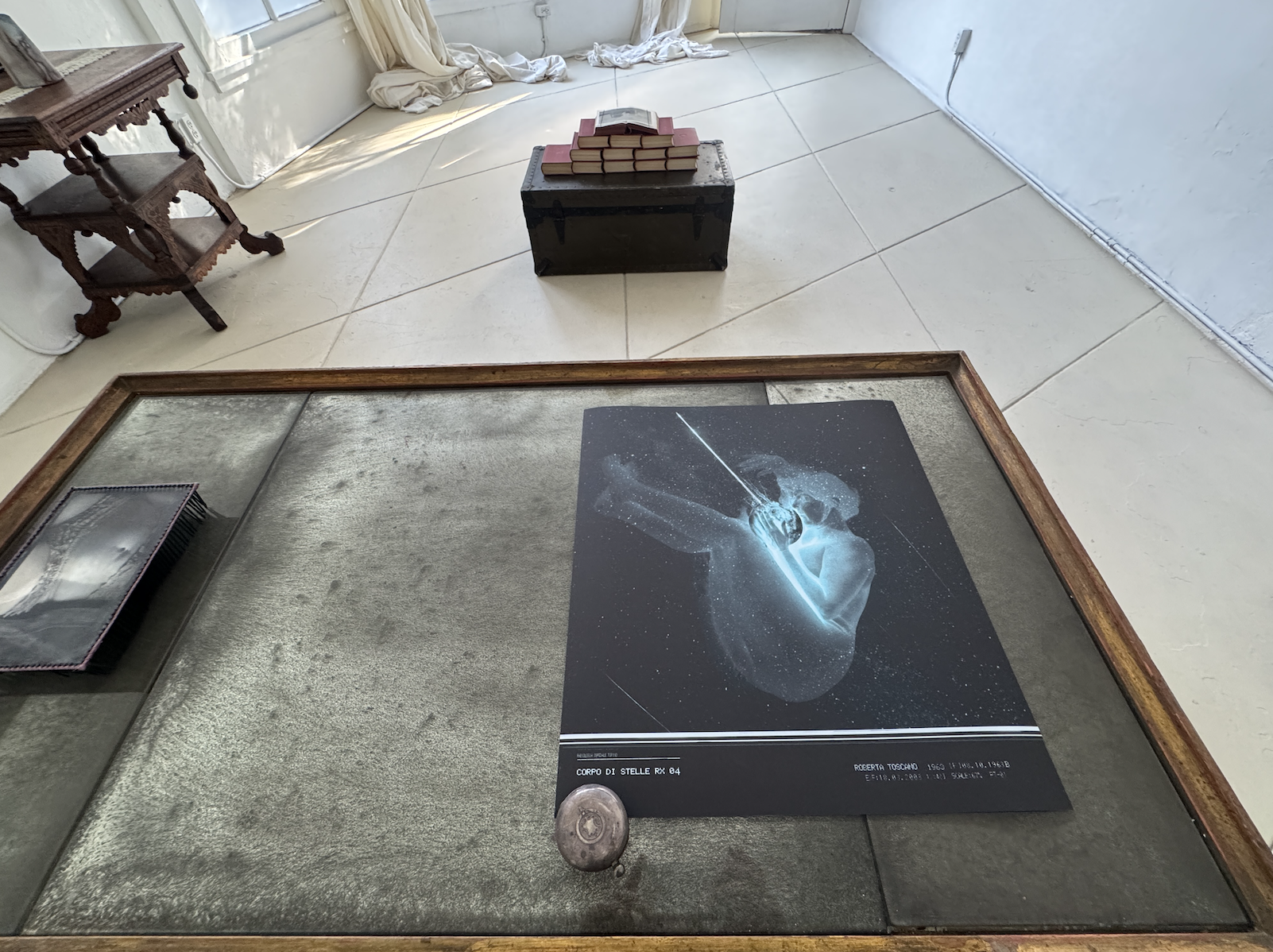
installation view el nido
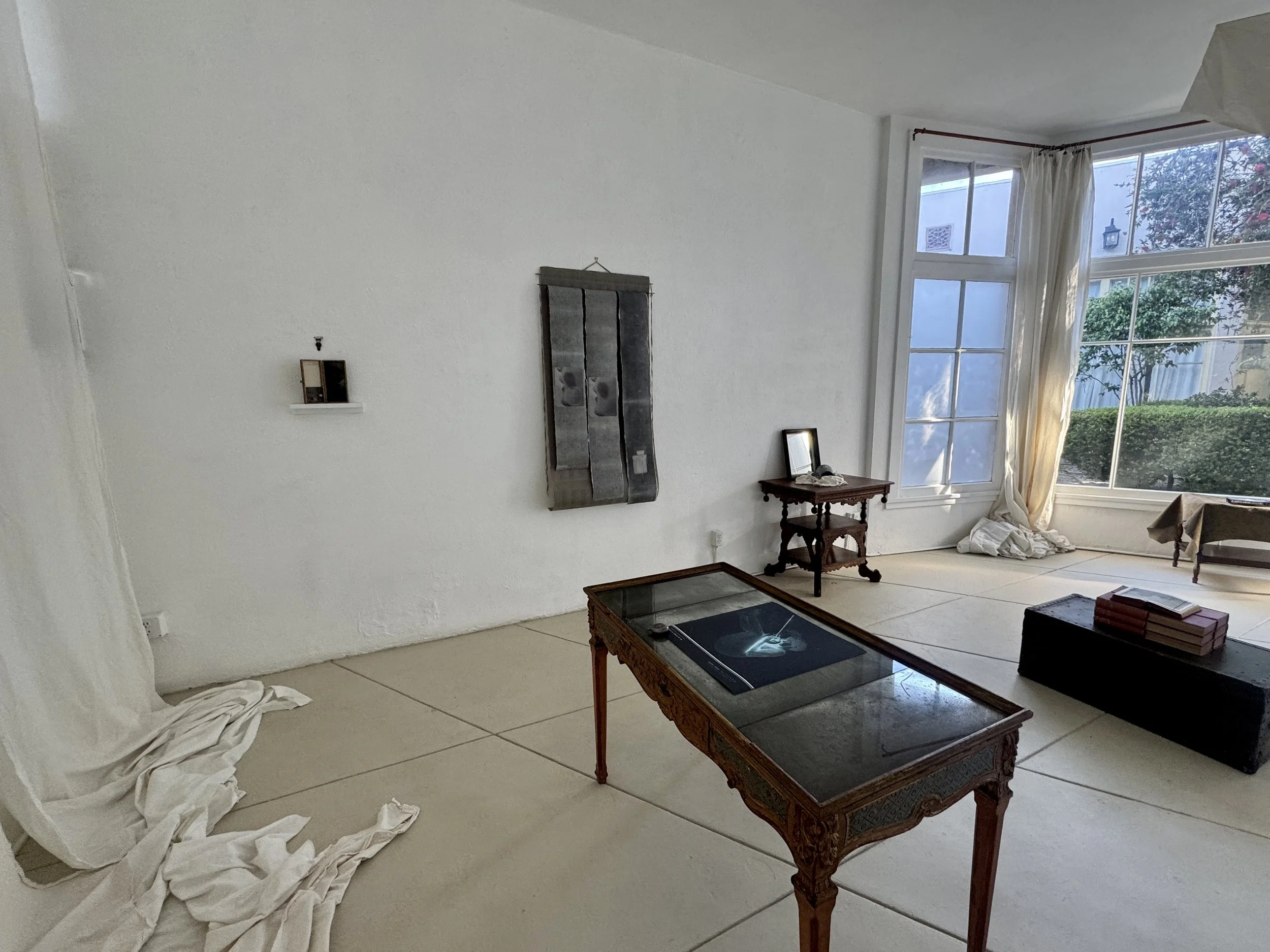
installation view at el nido
notes about the artwork
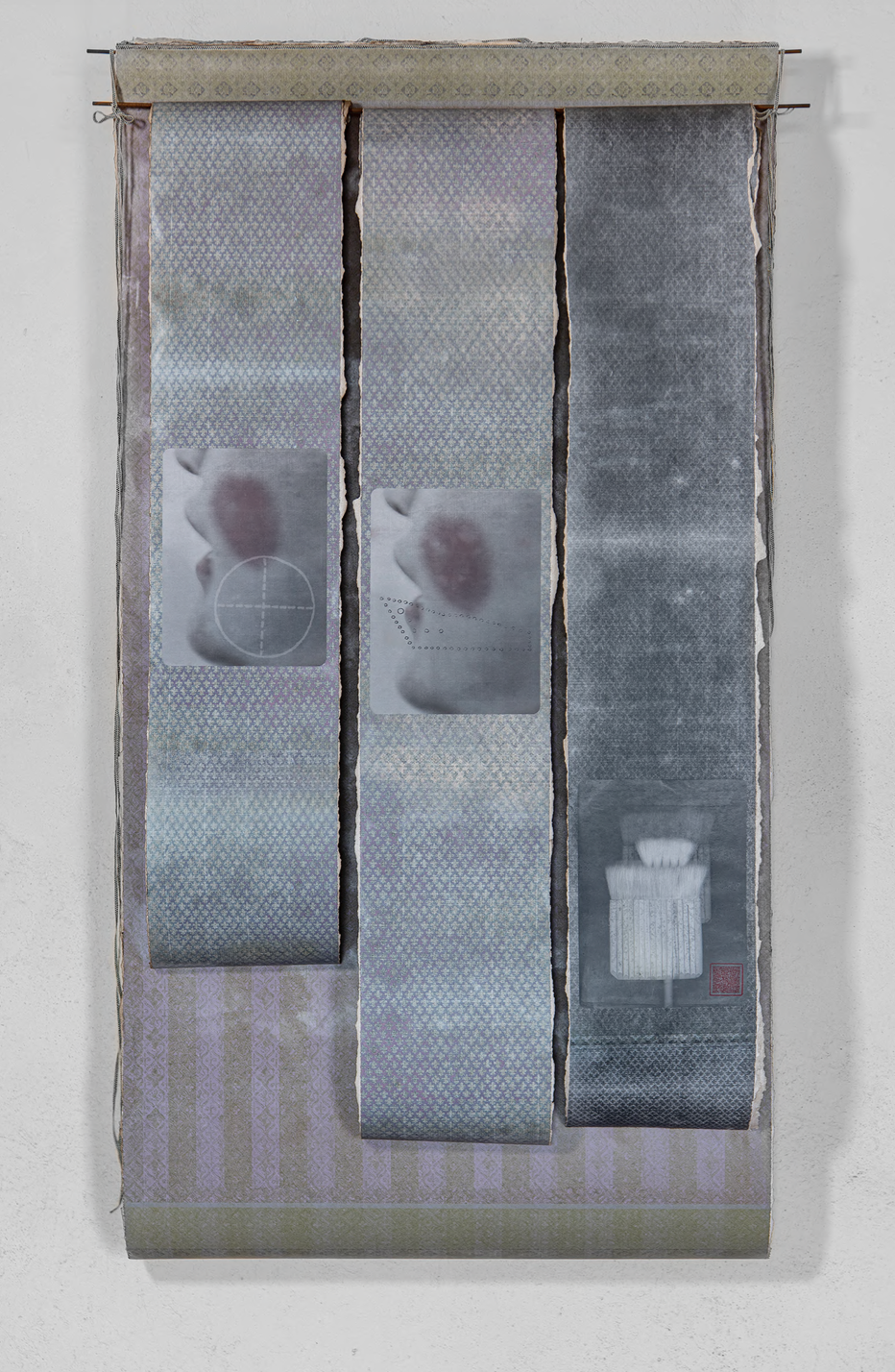
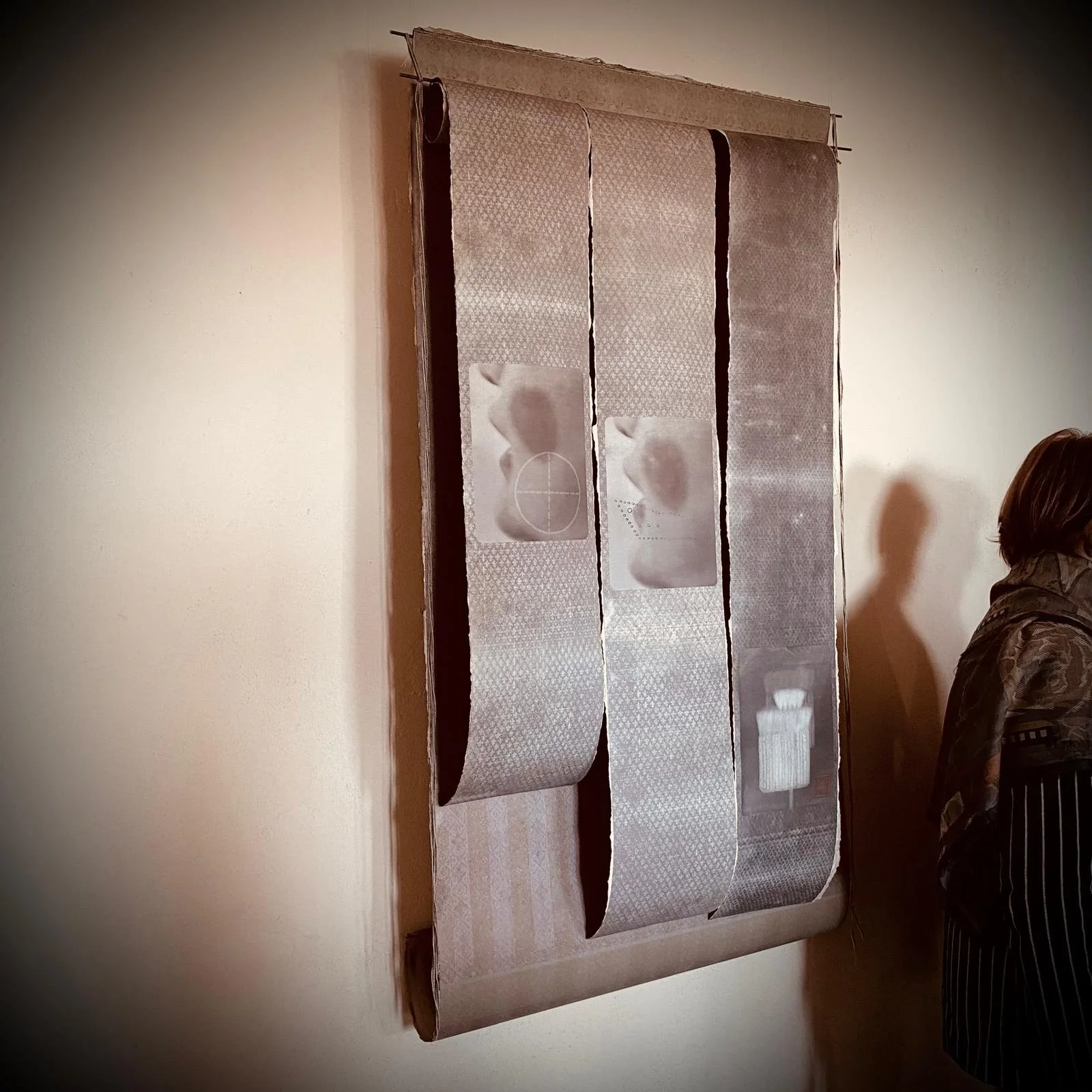
L. Mikelle Standbridge, Photo-Scrolling
L. Mikelle Standbridge’s Photo-Scroll-ing series is suspended in space, unfolding through multiple layers. They cross-reference questions of ownership and authorship; QR codes embedded within the works invite further engagement, opening additional layers for consideration.
Standbridge’s third work in the exhibition, The Big Heart in the Little Girl, takes on the presence of a utilitarian object—a photograph laid atop a surface, edged with nails—holding a quiet tension between intimacy and structure. The work emerges from the artist’s series Photo-Bodies: In Between the Edge of a Stitched Soul.
Throughout Standbridge’s practice, layering is not incidental. These works are not composed of surface illusion, but are carefully constructed—printed, stitched, and assembled by hand—holding both tactile and conceptual depth. The result is work that is as finely detailed as it is cerebral, yet resists over-analysis; the tonal shifts and layered surfaces are meant to be felt as much as they are understood.
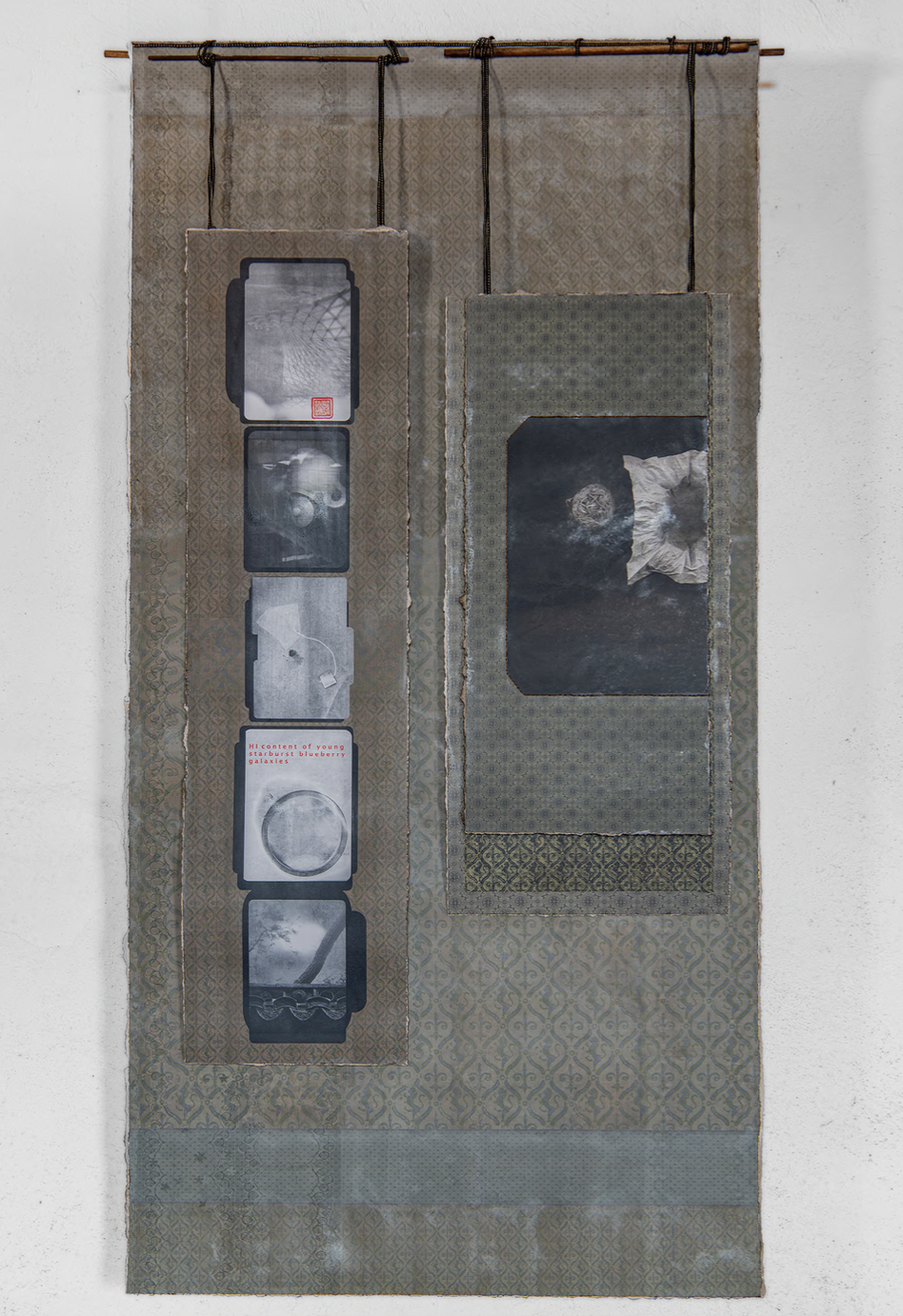
L. Mikelle Standbridge, Photo-Scrolling
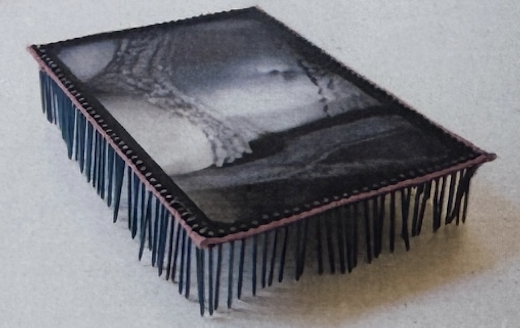
L. Mikelle Standbridge The Big Heart in the Little Girl
Throughout Standbridge’s practice, layering is not incidental. These works are not composed of surface illusion, but are carefully constructed—printed, stitched, and assembled by hand—holding both tactile and conceptual depth. The result is work that is as finely detailed as it is cerebral yet resists over-analysis; the tonal shifts and layered surfaces are meant to be felt as much as they are understood.
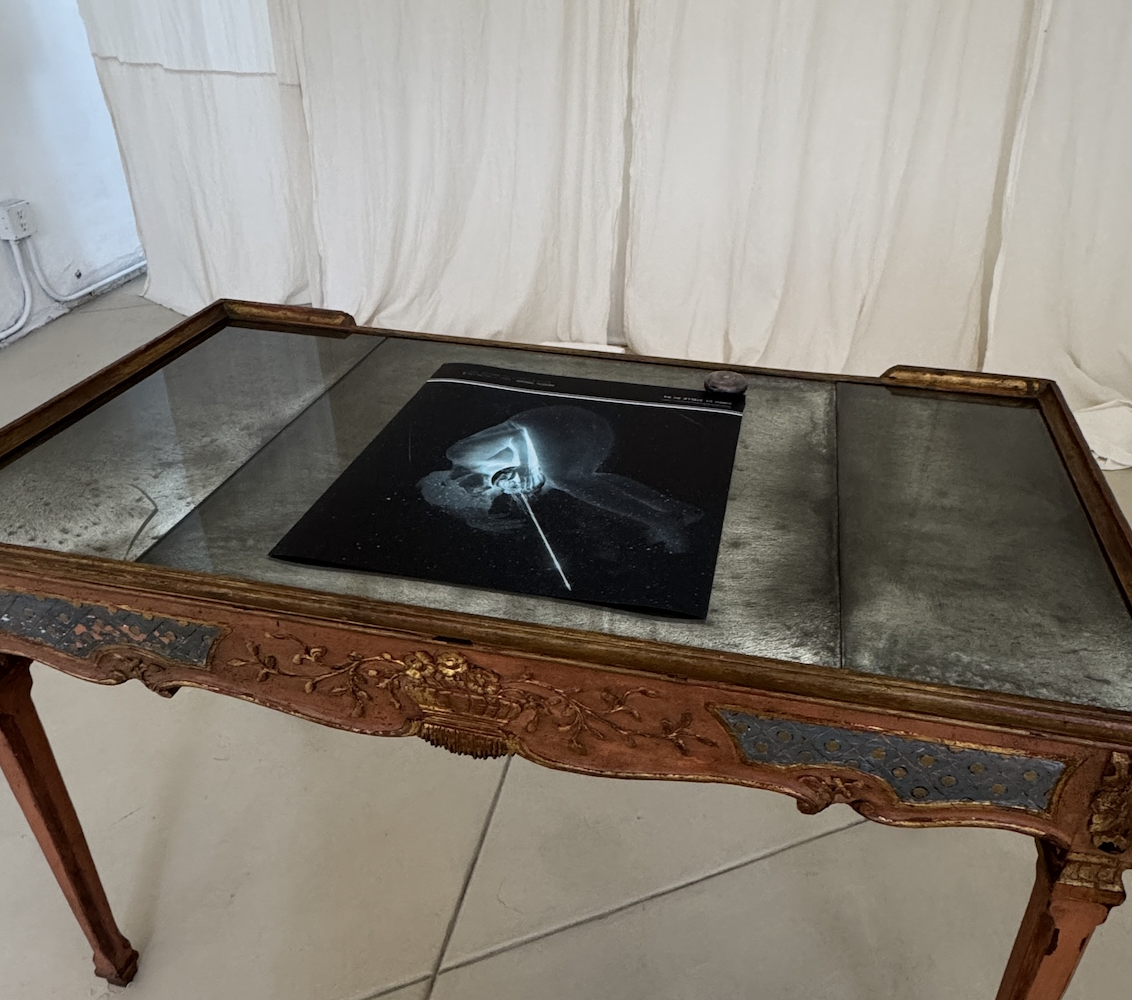
Roberta Toscano Corpo di Stelle RX 4
Corpo di stelle RX (X-ray Body) by Roberta Toscano is experienced in natural light, the CT scan laid flat on an antique mirror—its surface aged, blackening with time. The mirror introduces another layer, extending the image into subtle reflection, evoking a sense of celestial presence.
Shifting the clinical language of imaging into something more intimate, Toscano explores the relationship between the human body and the universe through simulated X-ray films that merge corporeal and cosmic forms. Presented unframed and without the illumination of a lightbox, the work invites a slower, more contemplative mode of looking—opening onto questions of relativity and being, holding both fragility and luminous presence.
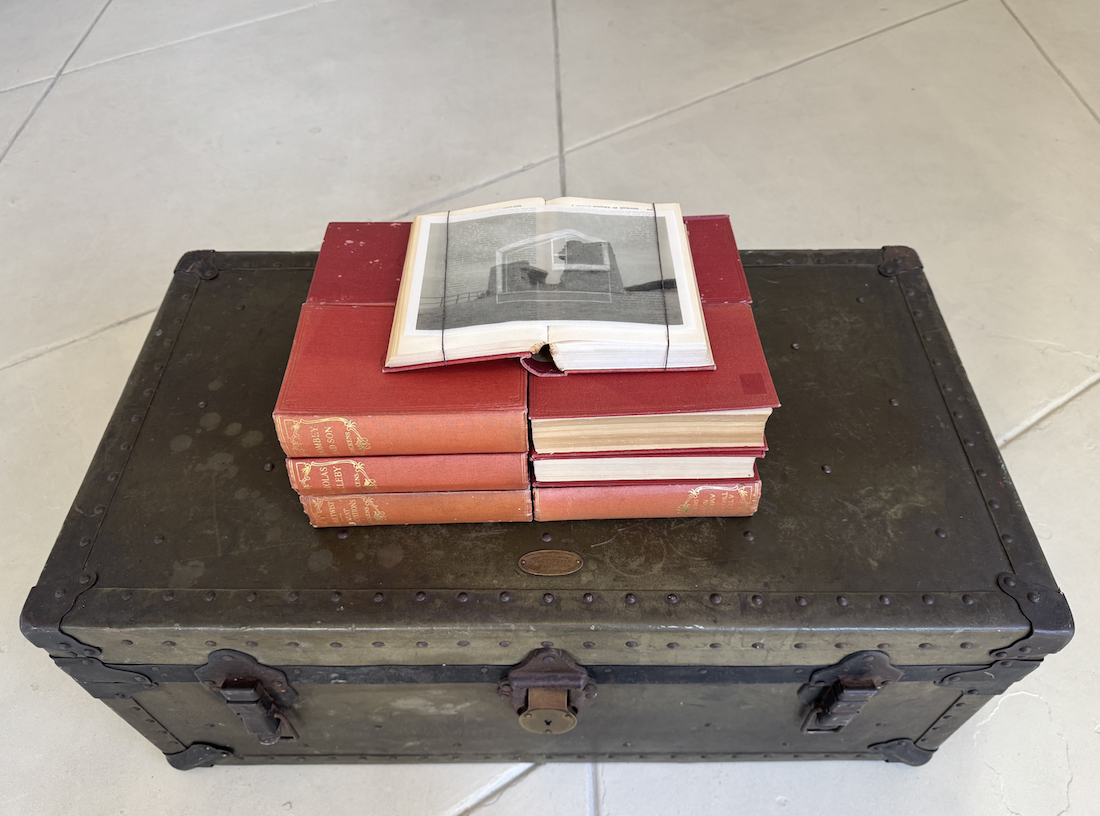
Silvia Gaffurini The Eight Lamp
Silvia Gaffurini’s The Eight Lamp (2021–2024) is a transparent, embossed photographic page created in dialogue with John Ruskin’s The Seven Lamps of Architecture (1849). In her interpretation, an eighth lamp emerges—one concerned with permanence, extending the narrative into the present.
Her photographs of abandoned structures are marked by embossed lines that suggest both visible and invisible states—what remains, and what lingers beyond sight. As part of a long-term inquiry into memory’s redemption and rebirth, the work, presented as a bound page within a stack of books, exists between image and object, inviting multiple interpretations.
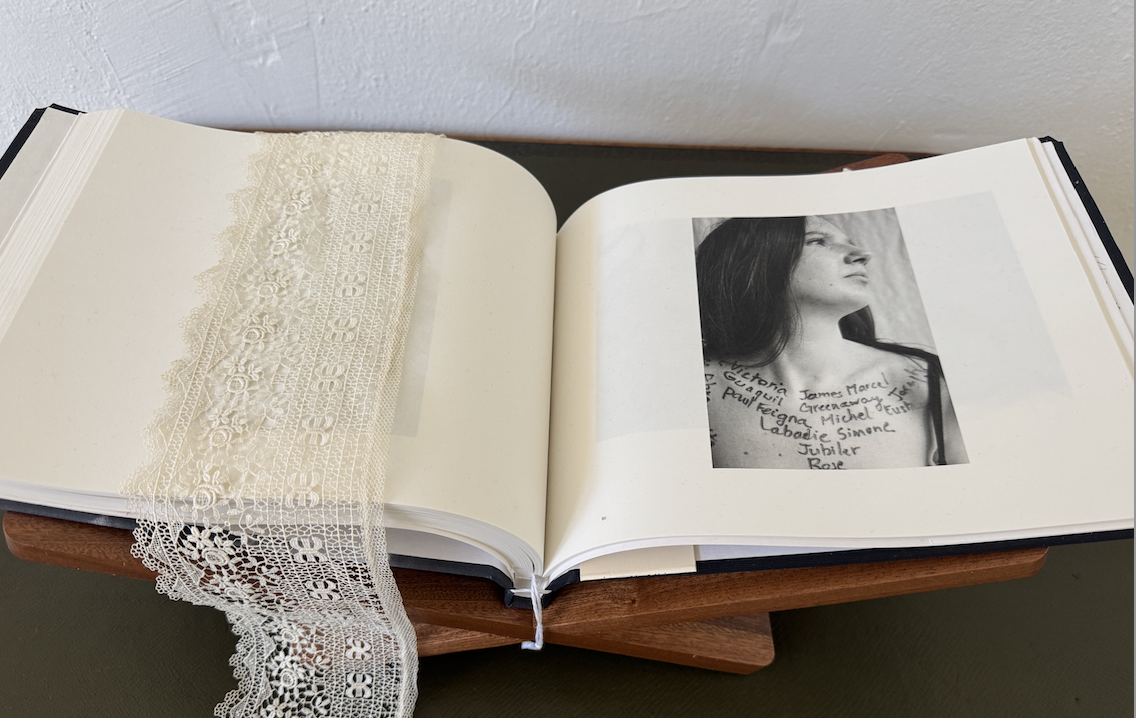
Olga Caldas Libro d’Artista: The Garden of Paths that Fork
Olga Caldas approaches photography as a tactile artifact, presenting an artist’s book bound in photographic fabric. The cover itself becomes image—material, intimate, and held.
Within, works from multiple series unfold. In The Garden of Paths that Fork, individuals write on their bodies—names of Holocaust survivors, fragments of memory—transforming the body into both surface and site of history. The work extends photography beyond documentation, becoming a vessel for memory—held, inscribed, and passed forward.
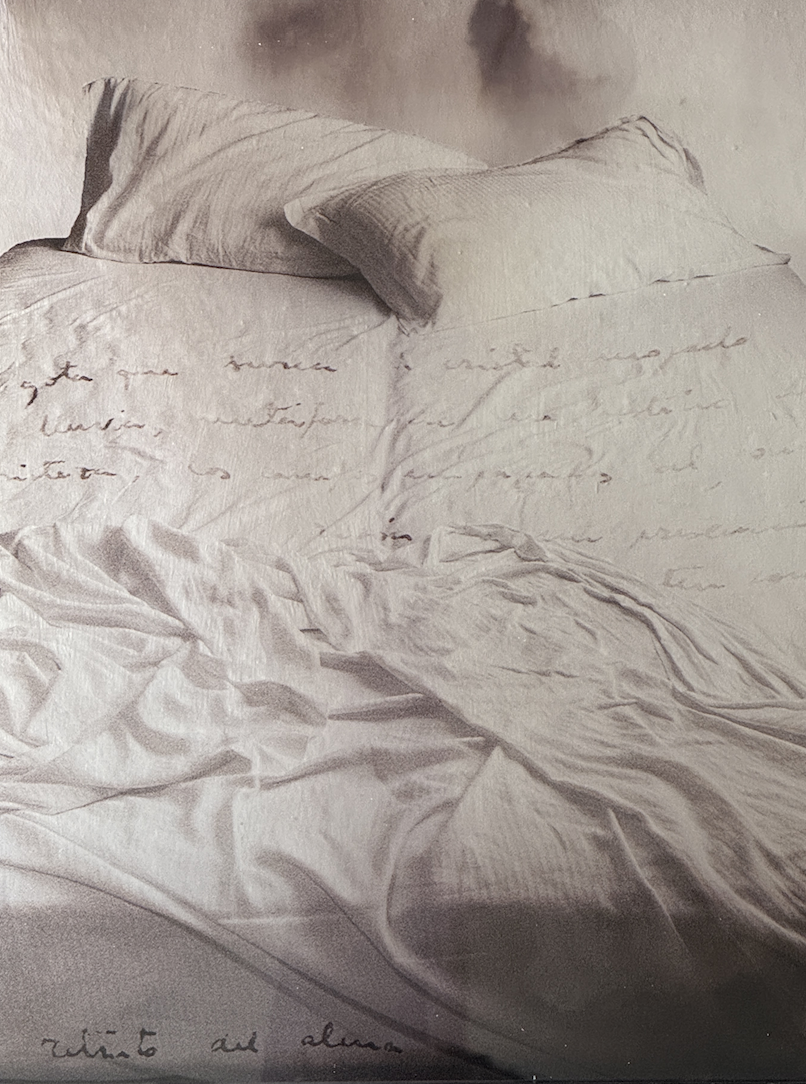
Fabiola Ubani In the Echo of (Our) Absence
In the Echo of (Our) Absence, Fabiola Ubani presents five photographic glass works arranged along a shelf. A recurring image of a bed moves across each panel, the forms subtly merging. The glass lends fragility, reinforcing the ephemeral nature of intimacy.
Between the intimate and the symbolic, Ubani suggests that absence is not silent—it reverberates. The bed becomes landscape: a field of memory, an echo that continues to reach us.
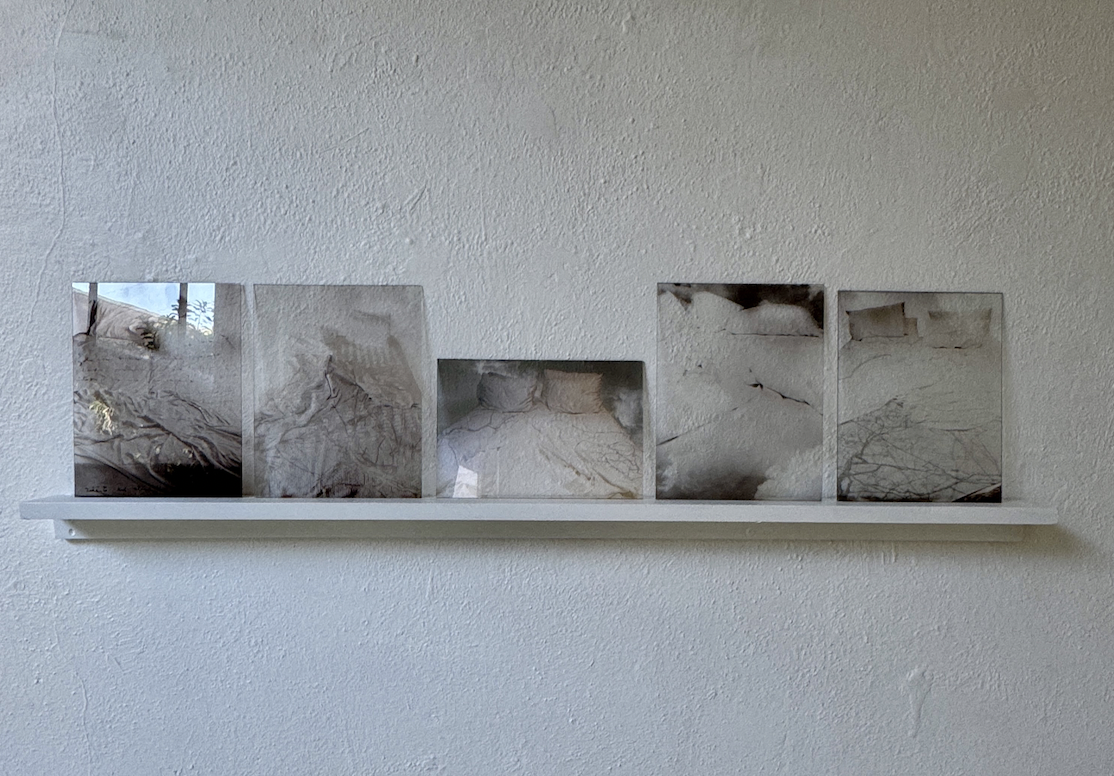
Fabiola Ubani In the Echo of (Our) Absence (group of 5) installation view
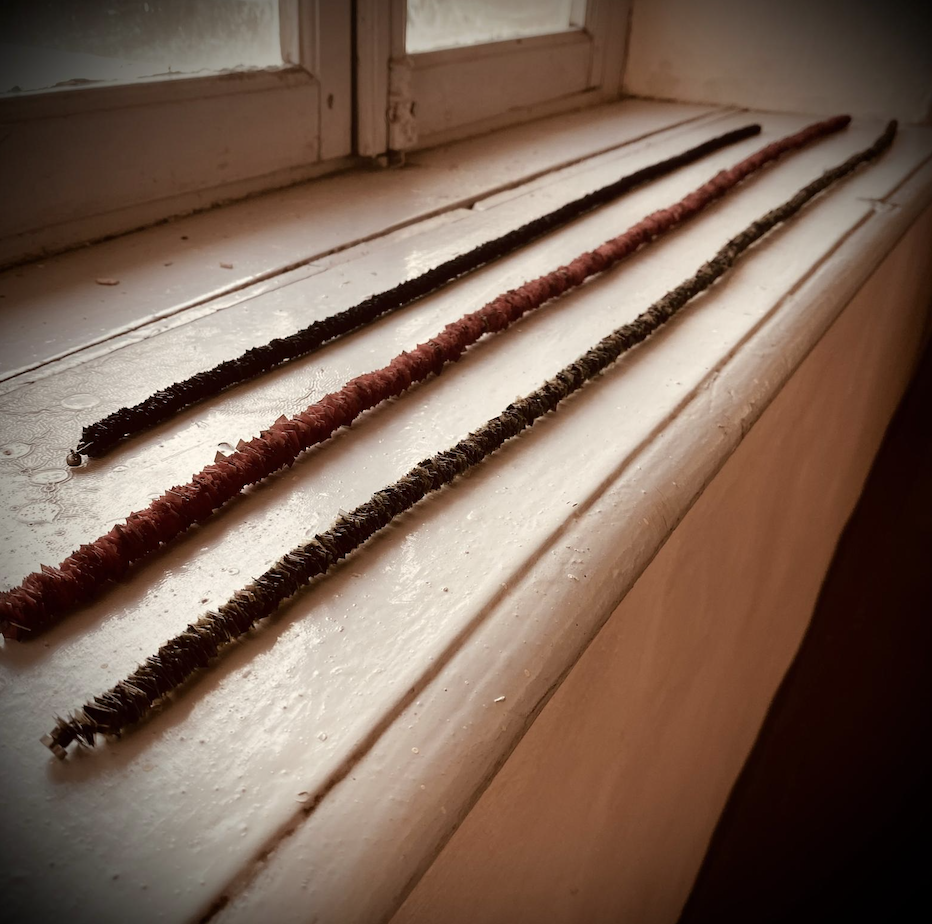
Bennie Flores Ansell Film Sprockets Timelines (photo credit: archtepo creativo)
Bennie Flores Ansell’s Film Sprockets Timelines (2016–2017) hangs on the wall, emphasizing the structural qualities of photographic material. By cutting and stringing together the sprocket holes of film, Flores Ansell constructs a new, nonlinear timeline—one in which moments from different decades converge, placing a sprocket from a 1950s slide directly beside one from the 1970s.
While photography is often understood as capturing a singular instant, these suspended strands reveal the extended life of film as a medium. Fragments of time are woven together, collapsing chronology and challenging the linear progression not only of narrative, but of the film roll itself.
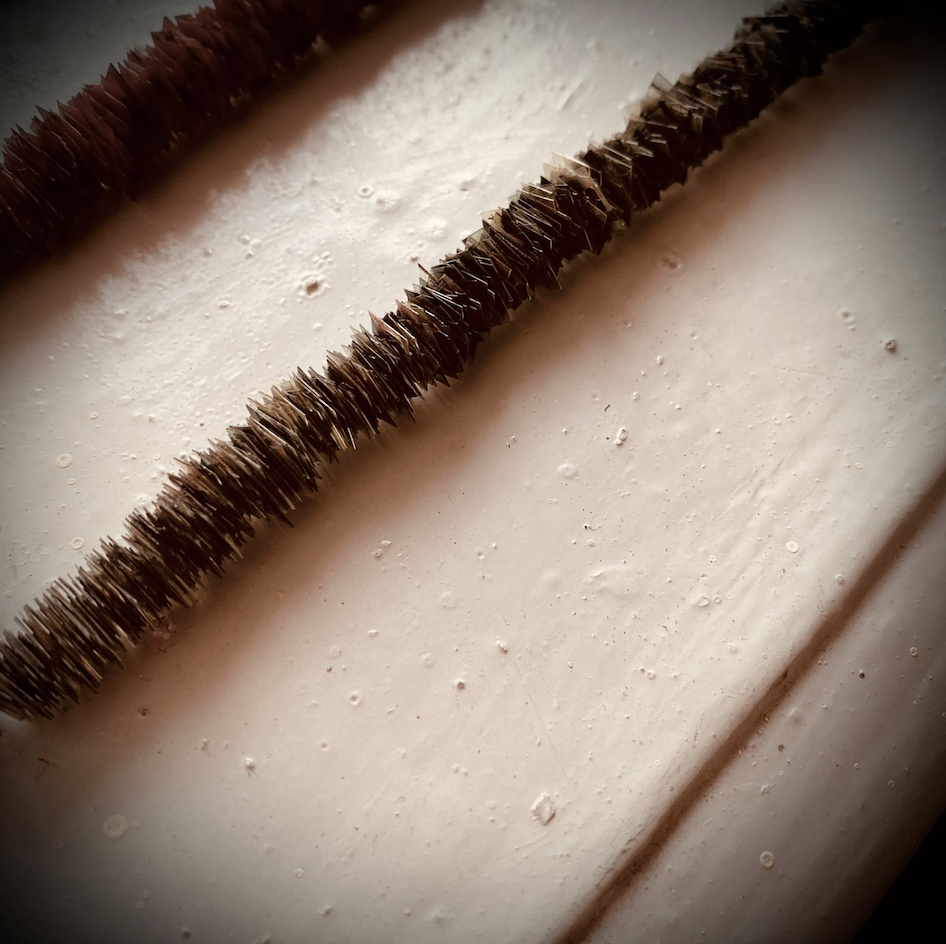
detail: Bennie Flores Ansell Film Sprockets Timelines (photo credit: archtepo creativo)
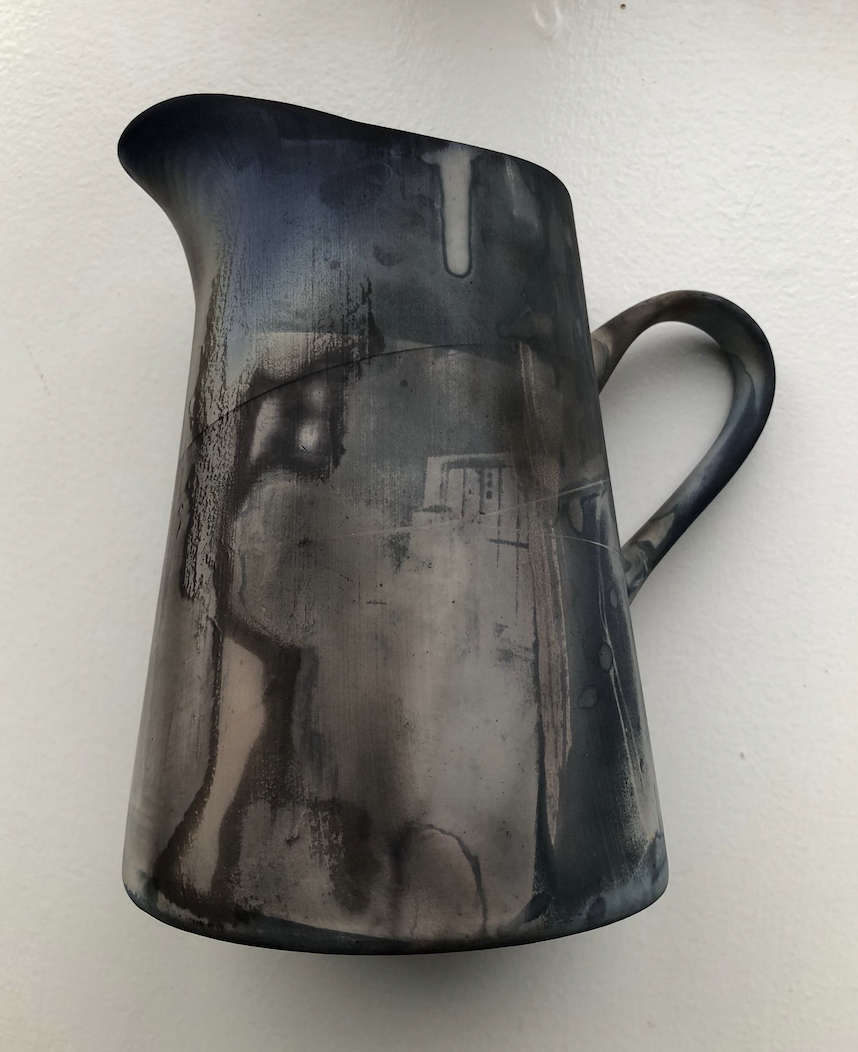
Oona Hyland Little Ones
Oona Hyland’s Active Forgetting presents a ceramic jug incorporating photographic imagery, merging vessel and image into a sculptural domestic form. The work emerges from the artist’s research and personal history as a descendant of a survivor of Bon Secours Tuam Co. Galway.
Addressing the legacy of institutional abuse in Ireland’s Mother and Baby Homes and Magdalene Laundries (1922–1998), the work explores trauma as personal and political—enduring, insidious, and intergenerational. Rather than resolving into fixed representation, it lingers in affect and memory. Hyland’s ongoing practice extends into kinetic sculpture, seeking new forms to register the experience of traumatic memory.
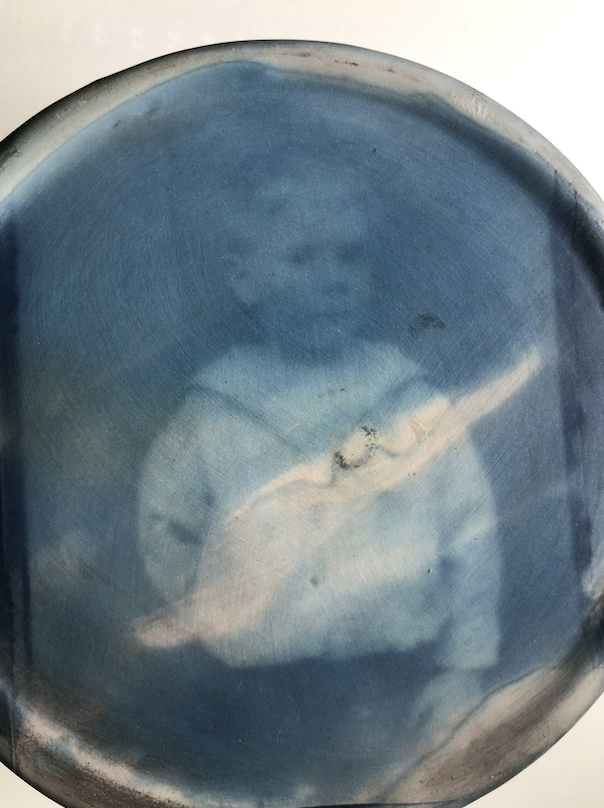
Oona Hyland Little Ones
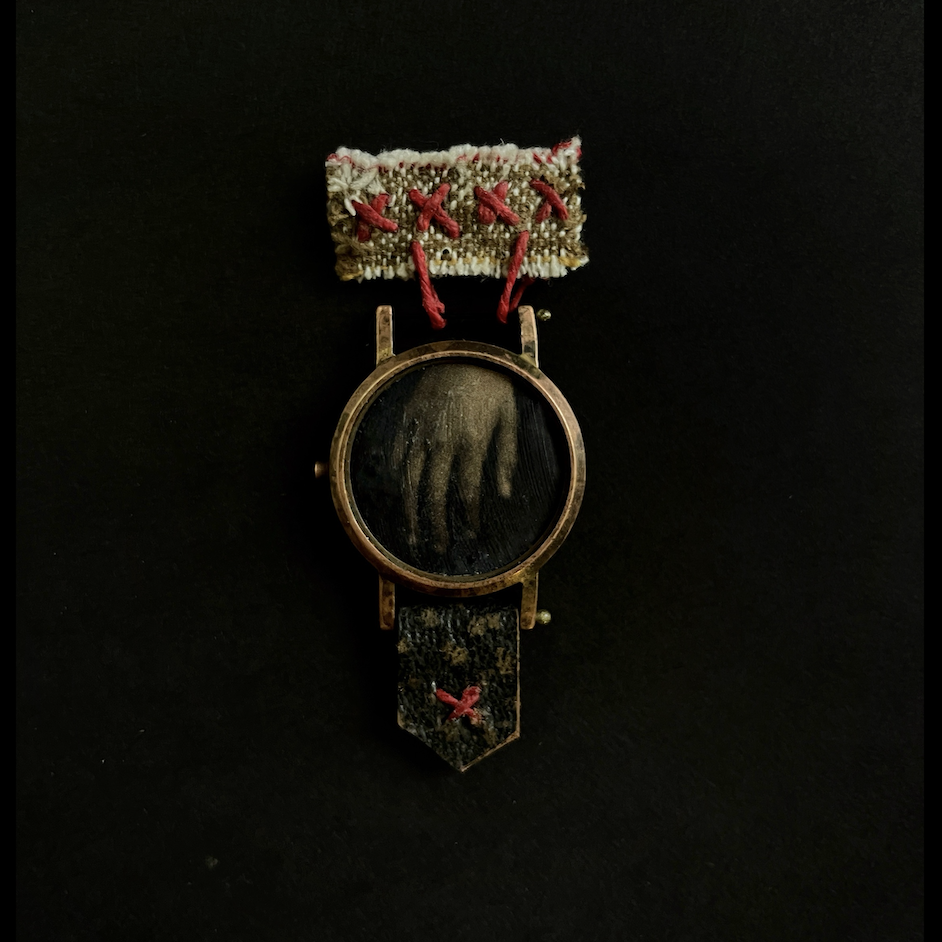
Dawn Surratt Adornment
Dawn Surratt presents two works attuned to time and memory.
Adornment combines metal, paper, waxed linen thread, cloth, and leather. A photographic image is cut to fit a watch finding, while hand-stitched cloth is sewn into a wearable pin—an intimate object shaped through touch and time.
Anagram brings together three digitally collaged images—a polyphemus moth, chalkboard scratches, and the hands of the artist’s niece—assembled within a vintage cutlery box. Accompanied by antique buttons, thread, and paper, the work forms a layered object: part archive, part assemblage.
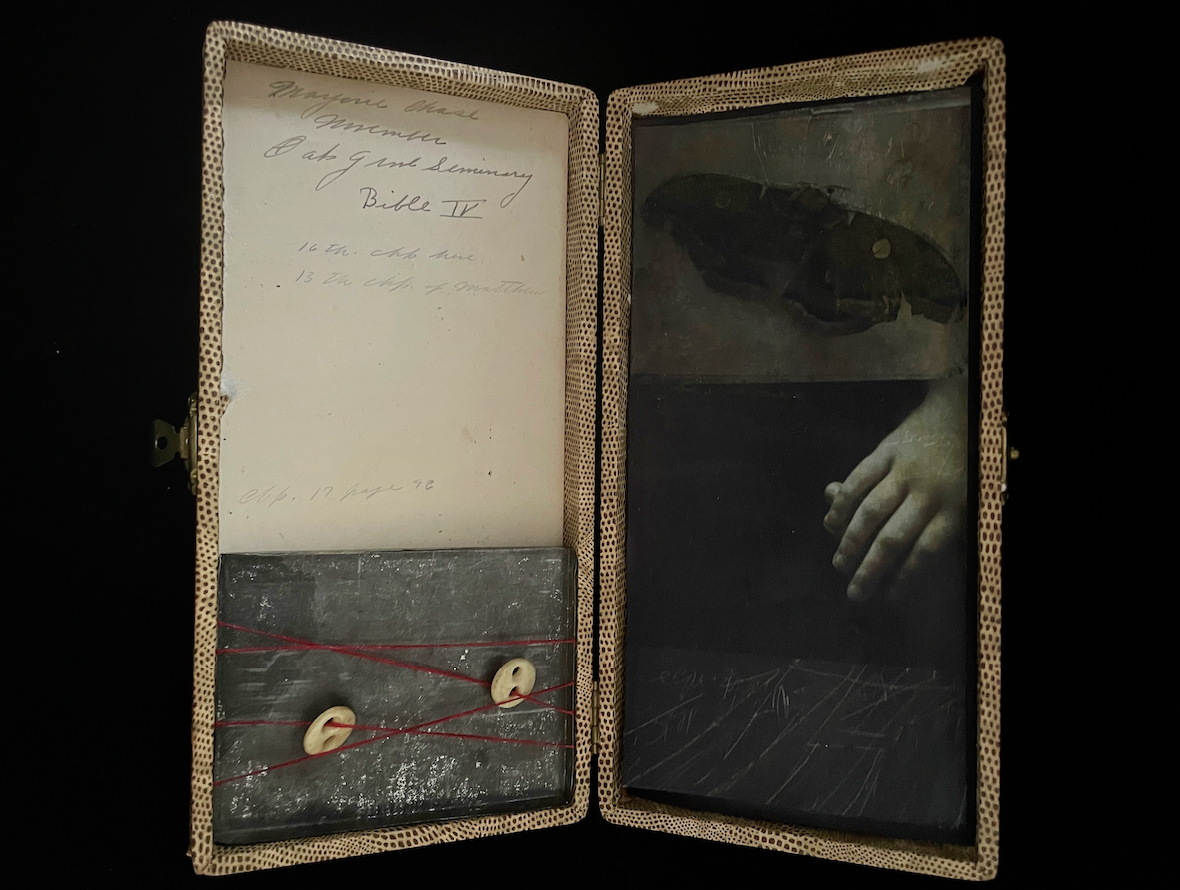
Dawn Surratt Anagram