Rural Within the City
Silence itself carries knowledge
El Nido, Los Angeles
A large part of my life begins and ends each day with Transcendental Meditation. Everything else in my life flows around this practice of silence and the quiet knowledge it reveals — a way of listening more deeply, exploring existence within all things, and remembering, above all, to be kind.
In 2026, I began ORBIS, an online experimental journal for transmissions, fragments, observations, and artistic research. It emerged from a desire to create a space where thought could move more freely between literature, philosophy, atmosphere, nature, memory, and contemporary life.
I am a believer in tending to the earth and an observer of the elements. A great part of my life has been centered around witnessing the evolution of landscapes — the shifting qualities of light, weather, trees, mountains, rivers, oceans, gardens, and seasonal change. These experiences have deeply informed how I think about creativity, consciousness, and presence. Nature, for me, is not separate from artistic practice, but part of an ongoing dialogue with time, perception, and existence itself.
What happens within the walls of El Nido continues to evolve organically through conversation, intuition, observation, and the rhythms of lived experience. Artists, writers, musicians, curators, scholars, performers, filmmakers, poets, healers, and seekers regularly pass through the space — each bringing different forms of knowledge, sensitivity, and inquiry. Some arrive for exhibitions, others for conversation, close looking, readings, gatherings, tea, or simply to spend quiet time within an atmosphere devoted to reflection and exchange.
Over time, El Nido has also become a place where unexpected dialogues and intersections naturally unfold. Recent visits have included lecturers and researchers from UCLA, as well as curatorial visits from the photography department at LACMA, who are currently shaping their own exhibition exploring photography and sculpture. These exchanges continually remind me that El Nido functions not simply as an exhibition space, but as a living site of inquiry where ideas are shared, tested, and expanded through conversation.
One friend recently described El Nido as a kind of “rural” space within the city — a phrase that stayed with me deeply. Perhaps this feeling emerges from the atmosphere itself: a quieter environment where people gather slowly, where conversations unfold without urgency, and where ideas that have long existed internally — but remained unspoken — suddenly find language through dialogue and encounter.
What continues to interest me most are these serendipitous moments of synchronicity: the unexpected meeting between people, disciplines, experiences, and intuitions. Often, the space evolves not through rigid planning, but through a continual process of listening — listening to my own inner rhythms, to what the environment seems to ask for, and to what the creative community in Los Angeles may quietly need at a particular moment in time. The programming develops organically through this sensitivity: embracing community, welcoming different forms of presence, and remaining open to what may emerge through shared experience.
I’m also deeply interested in how different creative disciplines intersect and nourish one another. Recent conversations and collaborations have extended into theatre, close reading, painting, and medieval studies through exchanges with Tea with HILMA Stories, Roofless Painters, Enclosure Academy, and The Enclosure Group — communities equally invested in atmosphere, slowness, materiality, contemplation, and the deeper psychological spaces where thought and image emerge.
The Enclosure Group — founded by Stacie Vos in 2020, alongside assistant director Madeline Fox — explores the history of medieval women’s religious communities and their afterlives in art, literature, and intellectual history. One phrase from the group continues to stay with me deeply: “The womb and the room give birth to thought and image.” These studies and conversations have quietly shaped many of my own reflections surrounding silence, enclosure, devotion, inner life, and the architecture of contemplation.
Recently, many of these conversations have circled around the idea of wilding — the human need to reconnect with nature, silence, slowness, and forms of knowledge that exist outside constant productivity and technological distraction. I find myself increasingly drawn toward questions surrounding rural places, retreat, landscape, and the role they play within artistic and spiritual life.
What interests me most is the realization that silence itself carries knowledge. It is often within silence — away from noise, systems, expectation, and performance — that creative flow begins to emerge. This is not something we are commonly taught in school, nor always something passed down through conventional structures of learning. Instead, it feels like a quieter and more secret world lodged within each person’s own trajectory: an internal compass slowly directing us toward meaning, attention, and creative becoming.
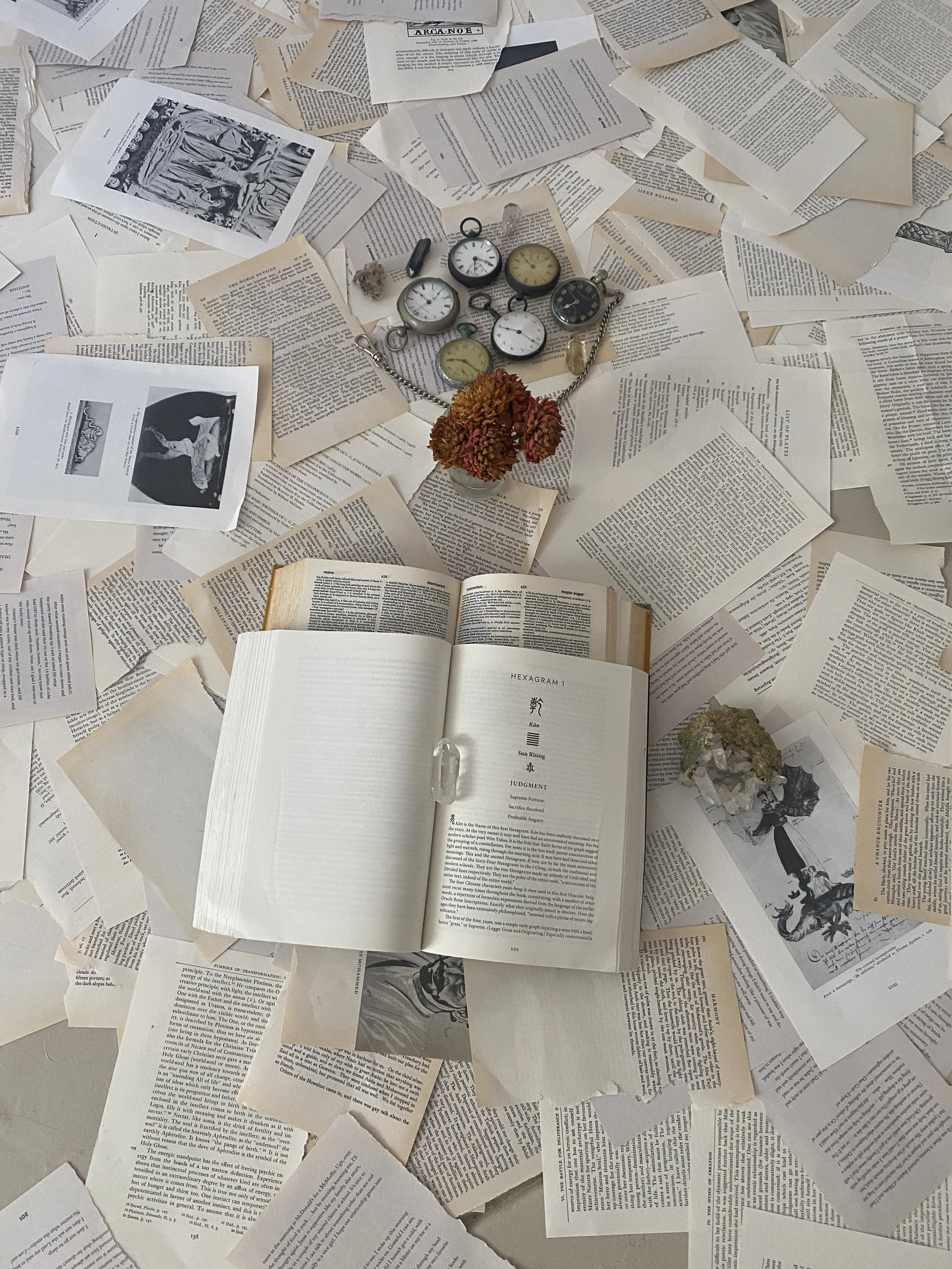
Day to day, my life is often quieter than people imagine meditating, reading, writing notes, visiting studios, editing texts, long conversations with artists and friends, walking, observing light, rearranging books and objects, preparing exhibitions, drinking tea, listening deeply, and remaining open to whatever unexpected thread appears next.
In many ways, everything I do returns to one ongoing question:
How can art help us remain awake to ourselves, to one another, and to the mystery of being alive?